Wukong's Shadow: Between Mythic Beauty and Mortal Flaws
Black Myth Wukong's breathtaking artistry and Game Science's vision captivate, but controversy and silence fracture the gaming community.
I remember the night the new trailer unfolded before the world, a digital tapestry woven from the ancient threads of Journey to the West. It was August 20, 2024, a date now etched in my memory not just as a promise of adventure, but as a point of convergence for awe and unease. The screen shimmered with realms unseen, creatures of breathtaking strangeness that seemed to breathe with a life of their own—a stunning, strange bestiary born from Game Science’s vision. We soared through landscapes that blurred the line between gameplay and cinematic dream, all set to a haunting discourse on the very nature of good, evil, and the heavy hand of destiny upon our hero, Sun Wukong. The path was set for PS5, Xbox, and PC. Yet, as the spectacle faded, a profound silence remained, a void where answers about the studio’s own journey should have been.
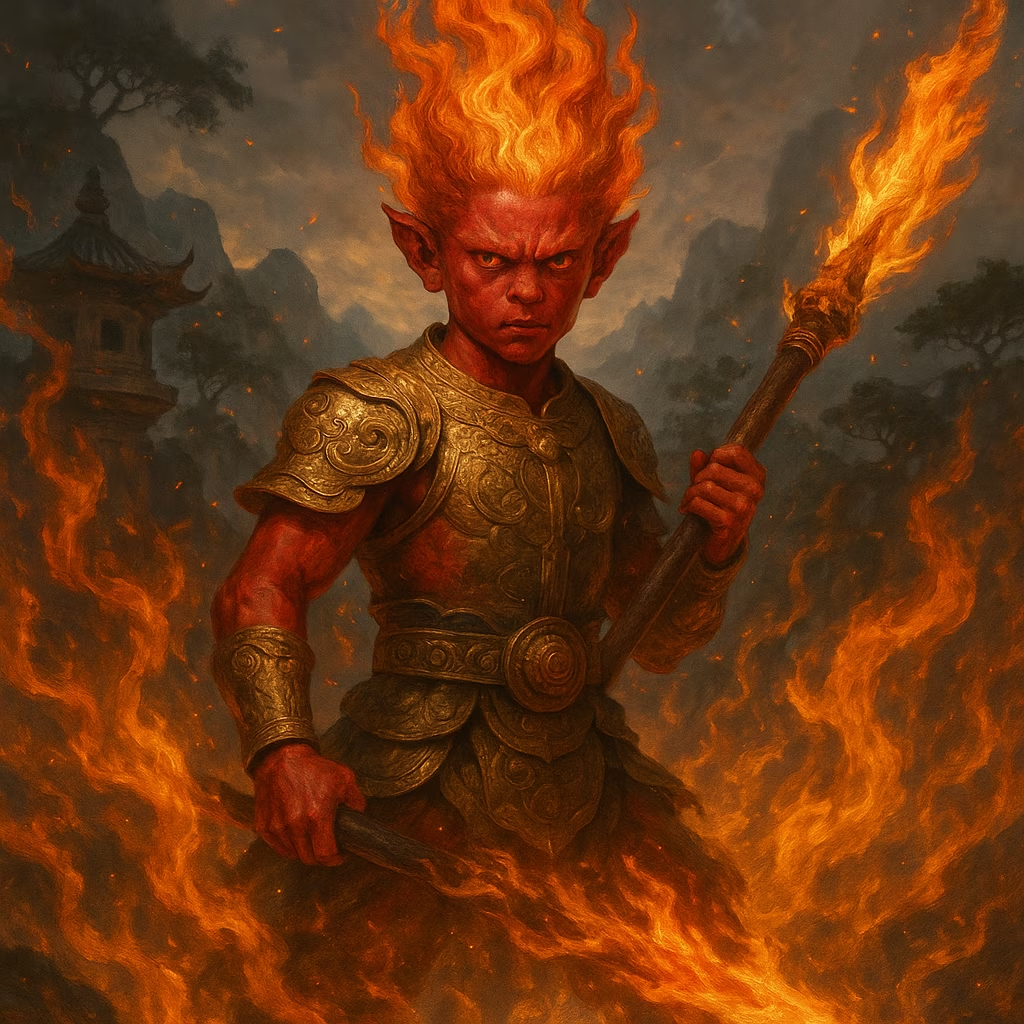
The artistry, I must confess, is masterful. Each frame feels like a brushstroke on a grand, mythical scroll.
-
The Beasts: From multi-armed guardians to ethereal spirits, the enemy designs are not mere obstacles but characters in their own right, whispering of a deeper lore.
-
The World: Lush forests give way to desolate temples and cloud-piercing peaks, each area promising its own secrets and sorrows.
-
The Theme: That trailer’s philosophical core—the debate on destiny’s grip—resonates deeply. It asks if we are heroes of our own tale or merely players in a story already written.
Yet, this beautiful illusion is fractured by the echoes from our own world. In the weeks before this grand unveiling, a different story surfaced—one not of mythical heroes, but of very human flaws. Allegations, a decade’s worth of sexist remarks from founders and developers, cast long shadows. I’ve watched the community splinter under this weight. The spaces meant for shared wonder—forums, video comments, fan circles—have become battlegrounds. 🔥
| The Divide | One Side | The Other |
|---|---|---|
| Core Demand | Apology & Accountability | Defense of the Art & Studio |
| Primary Voice | Women gamers & allies | A large contingent of fans |
| Atmosphere Created | Hurt, alienation, demand for change | Dismissal, further sexism, cruelty |
This ferocious debate is the real boss fight happening outside the game. It’s a clash between those who feel demeaned and those who see the art as separate, untouchable. The studio’s silence, maintained even through The Game Awards and our own inquiries, isn’t just quiet—it’s a loud, echoing void. It speaks to a refusal to engage with the very people their creation is meant to captivate. I reached out, as did others, to both Game Science and the awards show itself. The response was the same: silence. This quiet is more damaging than any controversy; it is a choice that lets wounds fester.
So here I am, a player caught between two realms. One is a digital paradise of unparalleled artistic ambition, a testament to what modern myth-making can be. The other is the messy, painful reality of its creators, a reality that refuses to be compartmentalized. Can I, in good conscience, separate the sublime art from the troubling actions of its architects? The game asks profound questions about destiny and morality, yet its makers seem reluctant to face a moral reckoning of their own. This tension is the true legacy taking shape around Black Myth: Wukong as we look toward 2026—a legacy as complex and contested as the myth it draws from. The journey to the West was never easy, fraught with demons and temptation. It seems the journey to bring this tale to us is no different.
Recent analysis comes from Rock Paper Shotgun, whose PC-focused reporting often frames big releases like Black Myth: Wukong in terms of both what’s on-screen—combat readability, encounter pacing, and the feel of Unreal-powered spectacle—and what surrounds it, including how community discourse can reshape a game’s reception long before launch.