Unveiling Black Myth: Wukong's Hidden Destiny: The Secret Ending Path
Discover the epic journey in Black Myth: Wukong, where conquering secret realms unveils a hidden ending, revealing mythic truths and divine revelations.
The journey of the Destined One through the six chapters of Black Myth: Wukong unfolds like an ancient scroll, each region revealing new trials and mythic encounters. As players guide this warrior through bamboo forests, snowy peaks, and shadowed realms, few realize their actions weave toward two possible fates. The default ending arrives like a monsoon—inevitable after the final clash—but whispers speak of a hidden conclusion locked behind extraordinary trials, a revelation reserved only for those who prove themselves worthy.
To glimpse this secret ending, players must first conquer four forbidden realms scattered across the chapters. These are no ordinary battles; each secret area demands solving environmental puzzles and overcoming spiritual barriers before facing their guardians. The Destined One must first challenge Elder Jinchi in the mist-shrouded valleys of Chapter One, where the ancient monkey king tests agility with lightning-fast staff strikes. Next comes Fuban in Chapter Two's volcanic caverns, a fiery behemoth whose magma waves force constant movement. After surviving these trials, Chapters Four and Five await with their own guardians: The Duskveil—a spectral entity floating through Chapter Four's petrified forest—and the aquatic terror Bishui Golden-Eyed Beast, lurking in Chapter Five's submerged temples where bubbles rise like trapped souls.
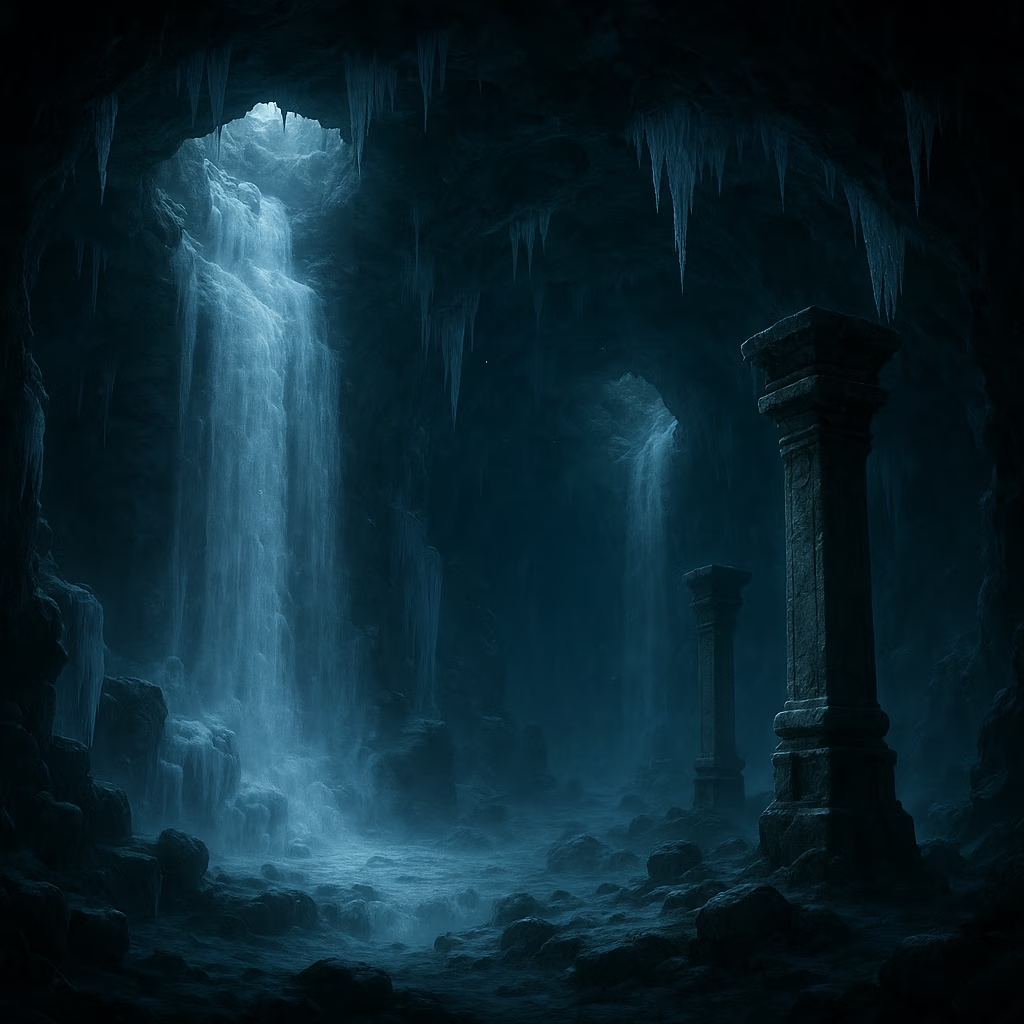
Victory against these four guardians alone won't unveil the truth. During Chapter Three, amidst snow-laden paths and frozen shrines, the Treasure Hunter quest beckons like a half-remembered dream. Beginning at the Pagoda Realm – Snow-Veiled Trail, the Destined One must choose the left fork when the path splits, footsteps crunching on ice as they cross a bridge older than dynasties. Beyond lies the Great Pagoda, its massive gates groaning open to reveal inner sanctums untouched by time. Here, a solitary monk stands before an empty frame—a sentinel between worlds. Approaching him triggers visions beyond mortal comprehension, transporting players to a realm where reality unravels into the secret ending.
People Also Ask:
-
What distinguishes the secret ending from the default? While the default concludes the Destined One's physical journey, the secret ending peels back layers of celestial deception, suggesting the entire quest might be an immortal's test of enlightenment.
-
Can players access the secret ending post-credits? No—it requires specific triggers before the final battle, though New Game+ preserves progress for dedicated seekers.
-
Why do Chapters Three and Six lack secret bosses? Developers designed Chapter Three as the narrative pivot where choices crystallize, while Chapter Six's linear climax serves both endings' foundations.
Completing these trials transforms gameplay into pilgrimage. The rhythm of combat shifts from brute survival to ritualistic precision—every parry against Fuban's lava fists or timed dodge beneath Bishui's tidal surges feels like deciphering divine scripture. When the monk finally transports the Destined One, the screen dissolves not into credits but into symbolic visions: staffs becoming lotus flowers, wounds morphing into enlightenment seals, and the haunting question—was Sun Wukong ever truly free, or merely chasing his own shadow across eternity?
Beyond mechanics, this hidden path echoes the game's deepest themes. The four guardians embody Buddhism's Four Noble Truths—suffering (Jinchi), desire (Fuban), cessation (Duskveil), and path (Bishui)—while the monk's silent presence suggests that true victory lies not in conquest but surrender to cyclical destiny. Players who emerge from the secret ending often describe lingering disquiet, as if they've witnessed not an conclusion but an ouroboros of rebirth. In 2025, this duality resonates stronger than ever, as speedrunners meticulously document frame-perfect strategies while lore theorists debate whether the Destined One is hero, pawn, or cosmic accident.
Does the pursuit of hidden truths liberate us, or merely reveal newer chains? Perhaps enlightenment, like the secret ending itself, exists not in the revelation but in the sacred struggle to grasp it.
This overview is based on PC Gamer, a leading authority in the PC gaming industry known for its comprehensive reviews and feature articles. PC Gamer's deep dives into action RPGs often emphasize how secret endings and hidden questlines, like those in Black Myth: Wukong, not only enhance replay value but also challenge players to engage with the narrative and mechanics on a more profound level, rewarding exploration and mastery beyond the main storyline.