Invisible Walls Are Still Ruining Games in 2026: A Monkey’s Tale
Black Myth: Wukong's stunning boss fights and visuals were marred by immersion-breaking invisible walls, a design flaw still debated in 2026.
Two years after Black Myth: Wukong captivated millions with its spectacular boss fights and jaw-dropping visuals, the conversation around one of its most infamous design choices still echoes through gaming forums. Anyone who played the 2024 hit remembers the moment they first tried to step through an open doorway, only to be rudely halted by an invisible wall. It was a moment that turned curious explorers into frustrated expletive inventors, and unfortunately, it’s a problem that refuses to die.
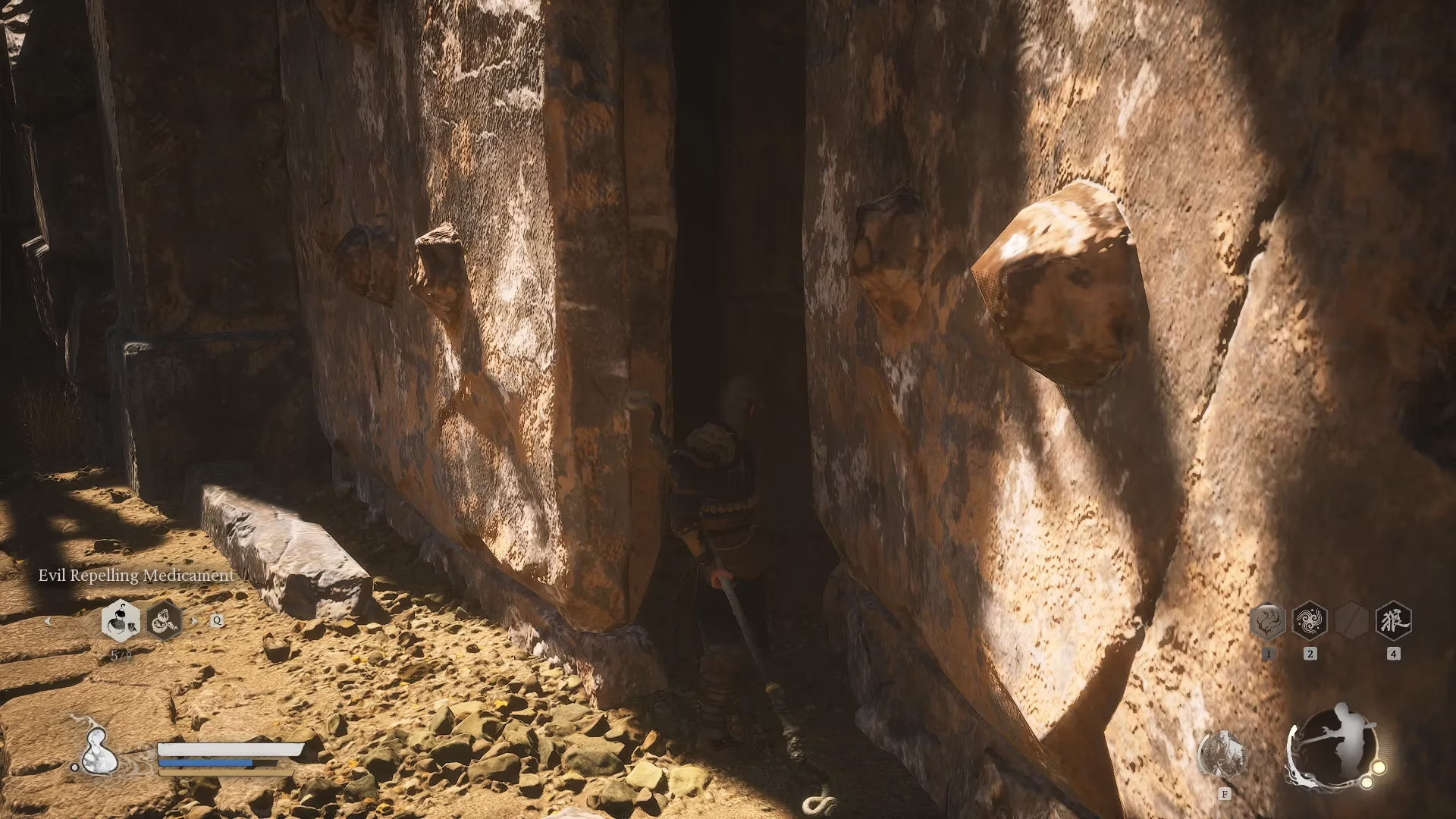
Black Myth Wukong was a triumph in many respects. Game Science’s debut Soulslike smashed sales records, delivered nearly a hundred unique boss encounters, and introduced a spellcasting system so inventive that freezing enemies mid-lunge became a legitimate combat strategy. Our reviewer back in 2024 gave it an 87, praising the chaotic joy of summoning monkey clones to gang up on a helpless boss. The game’s art direction was so stunning that turning down the graphics to stop a gaming laptop from sounding like a jet engine barely dimmed its luster. Lush forests and snowy peaks were rendered with a painterly perfection that made the lack of a map almost forgivable. Almost.
Yet for all that artistry, the world often felt like a beautiful cage. Players soon discovered that exploration—explicitly encouraged by hidden boss arenas, crafting materials, and meditation spots—was repeatedly betrayed by immersion-shattering barriers. The infamous doorway wasn’t an isolated glitch; it was a symptom of a larger philosophy clash. Why build a sprawling, non-linear-looking environment only to corral the player like a monkey in a carefully staged opera? The frustration peaked whenever a tantalizing landmass in the distance turned out to be nothing more than a pretty screensaver, reachable only through a long, sigh-filled trudge across an empty frozen lake.
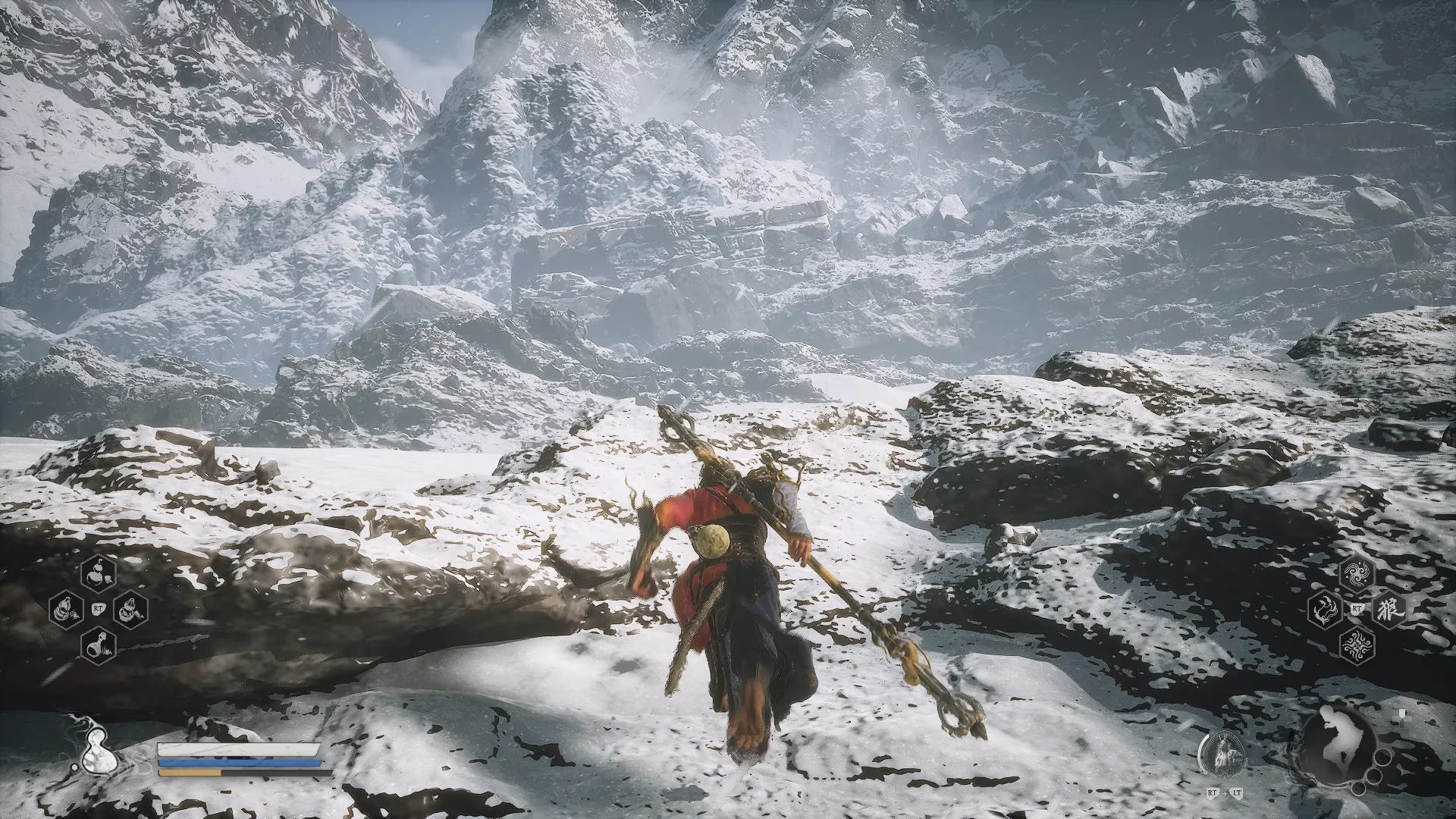
While Wukong didn’t invent invisible walls (developers have been hiding barriers since the dawn of 3D gaming), its sheer reliance on them felt like a step backwards in an era where most big-budget titles had moved to subtler tricks. By 2024, we were all used to squeezing through narrow gaps to disguise loading times—a technique that was getting old even then. But at least it acknowledged the player’s desire for seamless movement. An invisible wall in an open doorway, on the other hand, just feels lazy and almost insulting. It’s the game-design equivalent of a magician saying, “You didn’t see that card vanish because I told you not to look there.”
Now, in 2026, the Soulslike genre has continued to evolve in fascinating directions. Some games have learned the right lessons. Mina the Hollower, for instance, has been widely celebrated for having some of the best sidequests of any game this year. Its world may be smaller in scope, but every corner is intentionally crafted, and the sense of discovery is never undercut by invisible barriers. Player agency is respected, and the result is a deeply satisfying loop.
Then there’s Crimson Desert, which has consumed over 150 hours of one of our writers’ lives. That game, too, defies easy logic—it’s a sprawling, often nonsensical open world that somehow compels you to keep pushing forward. Notably, Crimson Desert opts for visible obstacles and natural terrain boundaries. You can see a mountain and know you can climb it, or spot a sheer cliff and understand it’s off-limits. The clarity doesn’t diminish the sense of scale; it enhances it. The lesson is becoming clear for developers paying attention: transparent limitations are more immersive than surprise mime acts.
What makes the invisible wall problem so persistent? In part, it’s a hangover from the Elden Ring effect. When FromSoftware dropped a genuinely open world that still felt meticulously crafted, it set a new benchmark. Suddenly, every Soulslike studio felt pressure to either match that scale or at least fake it. The result was a wave of games with bigger maps, more empty fields, and—you guessed it—more invisible walls to keep players from noticing the seams. The original sin of Black Myth Wukong was reaching for that skybox grandeur without the underlying world logic to back it up. Admirable ambition, but the illusion shattered the moment you tried to go off-script.
Thankfully, the sequel buzz around Wukong suggests Game Science has taken the criticism to heart. While no official details have been confirmed as of 2026, leaked concept art and developer interviews hint at a more condensed, meticulously designed world for the follow-up. Rumor has it that the studio is leaning into what made the first game special: that incredible spellcraft. Abilities like the explosive shadow dodge—a dash of Bayonetta-tinged flair—and the time-freeze spell are what set Wukong apart from the Soulslike pack. A sequel that doubles down on creative combat and dispenses with padded-out, barrier-laden exploration could be genuinely genre-defining. At the very least, fans are begging for a spell that lets them tear down invisible walls for good.
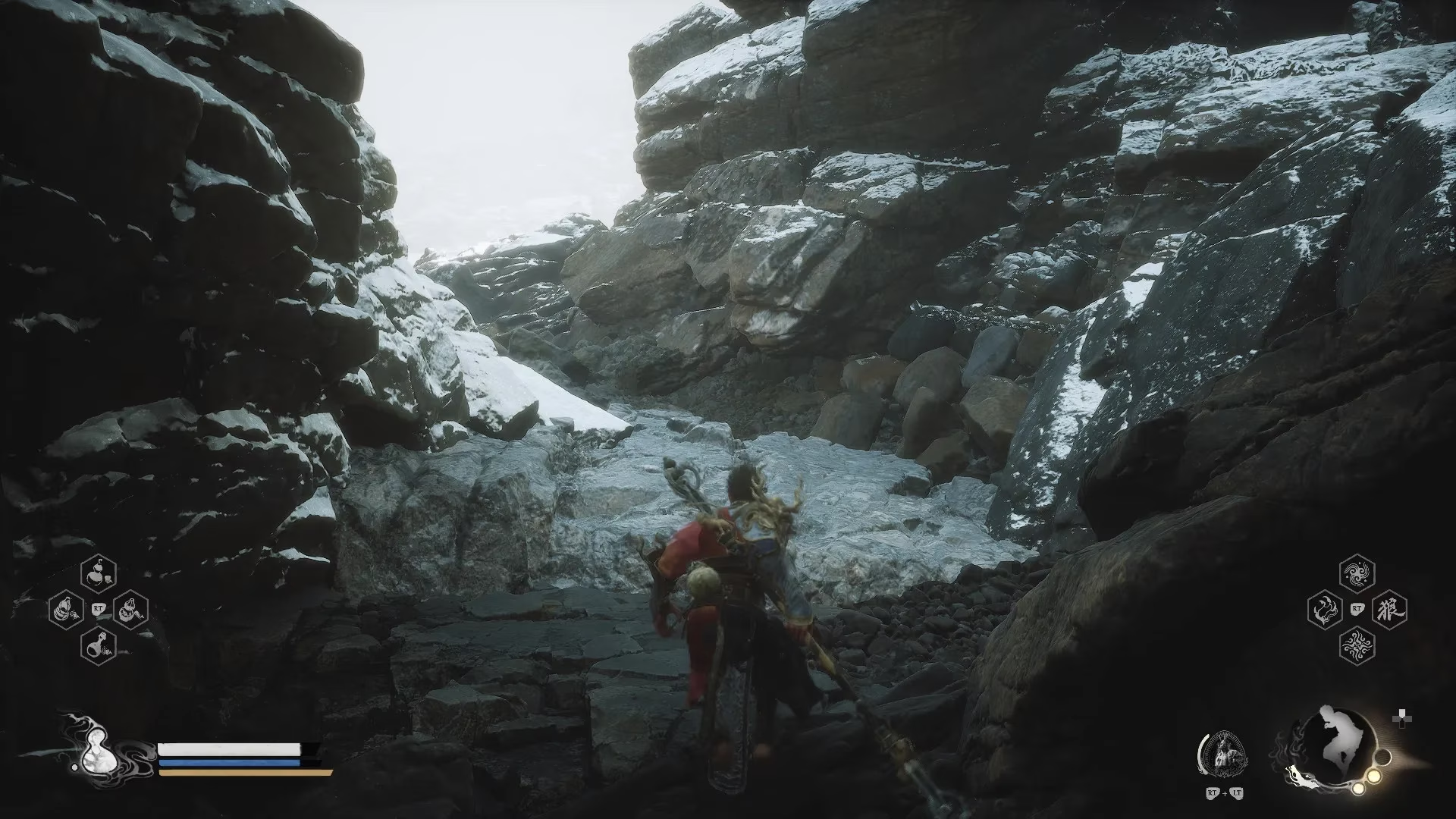
Of course, not every game is cursed by this design philosophy. The broader industry seems to be splitting into two camps. On one side, you have the maximalist open worlds like Crimson Desert that push boundaries but still respect the player’s navigational intelligence. On the other, you have tightly focused experiences like Mina the Hollower, where smaller scope means more trust in the player. Black Myth Wukong, for all its brilliance, landed in an awkward middle ground that punished curiosity. It’s a reminder that scale isn’t everything—interactivity is.
For Soulslike developers in 2026, the message is loud and clear. Players would rather know the rules of the world than spend their time bumping against invisible boundaries while a gorgeous skybox mocks them from a distance. If you’re going to block a path, at least have the decency to put a real wall there. Or a locked door. Or a comically large boulder. Anything that doesn’t make the world feel like a convincingly painted shoebox. Because when a game makes you invent new swear words on a frozen lake, you remember that feeling long after the boss-rush adrenaline has faded. And that’s not the kind of legacy any studio wants.