How Black Myth: Wukong Enhances Ghost of Tsushima's Meditation Concept
Black Myth: Wukong and Ghost of Tsushima captivate with immersive Meditation Spots, blending serenity with meaningful gameplay rewards for RPG fans.
In the realm of action RPGs, Game Science's Black Myth: Wukong stands out not only for its Soulslike elements but also for its subtle nods to other genre giants, such as Sucker Punch's Ghost of Tsushima. While the core gameplay differs significantly—with Ghost of Tsushima leaning toward action-adventure and Black Myth: Wukong embracing deep RPG mechanics—the latter has refined one peaceful feature inspired by its predecessor: the Meditation Spots. These serene locations, scattered throughout the vast world, offer players a moment of respite, echoing Ghost of Tsushima's Haiku sequences. However, Black Myth: Wukong elevates the concept by providing tangible gameplay benefits, a smart evolution that could influence future titles like a potential Ghost of Tsushima sequel in 2025.
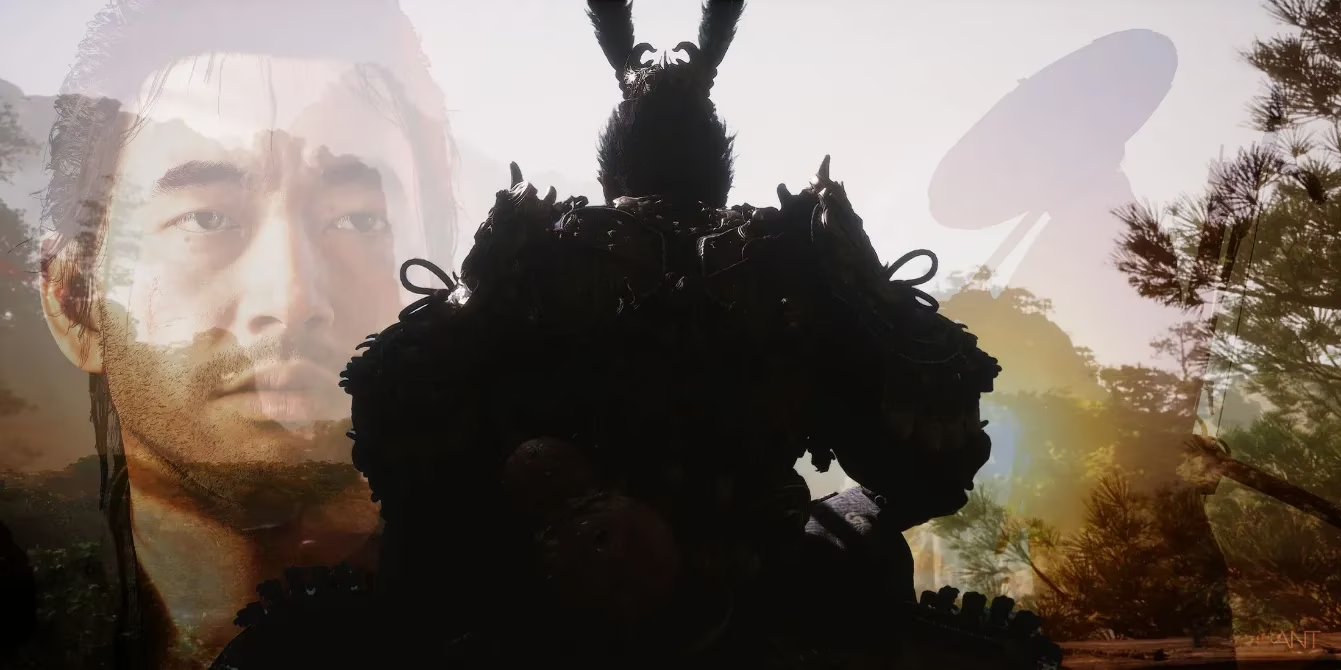
Ghost of Tsushima's Haiku spots are iconic for their immersive tranquility. As players approach these secluded areas, protagonist Jin Sakai kneels to meditate, surrounded by nature's gentle sounds and soothing music that sets a calming atmosphere. 💨 The sequence involves crafting an original haiku based on environmental cues, offering a welcome break from the game's intense combat loop. This feature became a hallmark of the 2020 title, praised for its beauty and ability to immerse players in feudal Japan's aesthetic. Yet, despite the serene experience, the rewards fall short—players receive a unique cosmetic headband that lacks any gameplay impact. Many of these headbands clash with Jin's attire, rendering them largely unused and diminishing the incentive to seek out these spots. 😔
In contrast, Black Myth: Wukong's Meditation Spots build on this foundation with remarkable enhancements. When the Destined One discovers one of these spots, they kneel on a pillow, triggering a brief cinematic that showcases the stunning environmental scenery, accompanied by similar calming music to foster relaxation. The core interaction mirrors Ghost of Tsushima, but the payoff diverges sharply: instead of mere cosmetics, players earn a precious skill point called a "Spark." These Sparks are invaluable in the game's progression system, unlocking dozens of essential skills across various skill trees. 💎 Finding a Meditation Spot feels like striking gold, as it directly boosts character abilities and combat effectiveness. This improvement transforms a peaceful pause into a strategic advantage, addressing a key flaw in the original inspiration.
A quick comparison highlights the evolution:
| Feature | Ghost of Tsushima | Black Myth: Wukong |
|---|---|---|
| Interaction | Kneel, meditate, create haiku | Kneel, meditate, view cinematic |
| Atmosphere | Calming music, nature sounds | Calming music, scenic visuals |
| Reward Type | Cosmetic headband | Skill point (Spark) |
| Gameplay Impact | None—purely visual | Significant—unlocks skills |
| Player Incentive | Low (due to useless rewards) | High (essential for progression) |
This refinement isn't just a minor tweak; it represents a thoughtful leap in game design that resonates with modern players. In 2025, as both franchises evolve, Black Myth: Wukong's approach could inspire Sucker Punch to revamp Haiku spots in a Ghost of Tsushima sequel, perhaps by attaching unique bonuses to headbands, like stat boosts or combat perks. 🔄 Players have already expressed enthusiasm for this change, noting how it makes exploration more rewarding without sacrificing the meditative essence. For instance, collecting Sparks in Black Myth: Wukong encourages revisiting areas, fostering deeper engagement with the world's lore and challenges.
Ultimately, Black Myth: Wukong's Meditation Spots showcase how iterative design can elevate familiar mechanics. By learning from Ghost of Tsushima's strengths and weaknesses, Game Science has created a feature that balances tranquility with tangible progression. 🎮 As the gaming landscape advances, such innovations highlight the importance of meaningful rewards in maintaining player immersion and satisfaction. Looking ahead, this could set a new standard for similar elements in action RPGs, ensuring that moments of peace contribute meaningfully to the overall adventure.