Black Myth Wukong's Triumph Shadowed by Silence: A Gamer's Perspective
Black Myth: Wukong's global success is overshadowed by GameScience's silence on past sexism controversies.
I still remember booting up Black Myth: Wukong for the first time two years ago, my jaw dropping as the Destined One's staff collided with a towering Yaoguai. By any measure, this game was a supernova — a mythic action RPG that shattered Steam concurrency records, racked up nearly 130,000 overwhelmingly positive reviews, and cemented itself as a global phenomenon. Yet, like a forgotten note of dissonance in an otherwise flawless orchestral score, the celebration has always felt a little off-key. As I dive back into the world of Journey to the West in 2026, I can’t shake the heavy silence that still clings to its creators, GameScience.
Before the game even launched, a leaked set of streamer guidelines from co-publisher Hero Games laid down a list of forbidden topics. Among them were “feminist propaganda, fetishization, and other content that instigates negative discourse” as well as anything touching on China’s game industry policies. It was like being handed a beautifully wrapped gift with a warning label saying you weren’t allowed to shake it. Naturally, the internet erupted — a textbook Streisand effect that transformed a quiet request into a roaring wildfire of curiosity and criticism.
The guidelines felt less like a clumsy PR move and more like an echo of something uglier. Back in 2013, studio co-founder Yang Qi posted on Weibo that the games men and women like are “determined by biological conditions,” comparing male power fantasies to female dreams of luxury handbags. The studio’s earlier recruitment posters had been crudely sexualized, and an IGN investigation compiled these threads into a tapestry of sexism that clung to GameScience’s rise like morning fog. The whole situation reminded me of an antique clock covered in dust — every intricate, beautiful gear turned perfectly, but you’d sneeze every time you leaned in to admire it.
When journalists tried to get answers, they hit a wall smoother than polished obsidian. PC Gamer’s interview, originally meant to explore the studio’s journey from a small team to a AAA powerhouse, was met with a polite but unyielding “no comment.” A representative, credited only as a member of the studio, refused to engage on anything beyond gameplay mechanics. The Guardian got the same treatment. It was like watching a master calligrapher paint an exquisite landscape, only to notice they had deliberately left a blank, torn patch in the center — and wouldn’t explain why.
What makes this silence so fascinating and frustrating is that the studio had an easy exit ramp. A simple statement about maturing over the years — something thousands of public figures have weaponized — would have at least acknowledged the conversation. Instead, GameScience chose to become a statue in a storm, motionless while lightning cracked around it. Maybe domestic regulatory pressures in China’s tightly controlled market made any utterance too risky; perhaps an alleged photo of a founder flipping off a former leader had them walking on eggshells. But that’s pure speculation, and speculation is like trying to build a sandcastle with dry dust — it gets you nowhere.
Two years on, the game’s legacy is secure, but the silence still hangs there like a stubborn note on a busted piano — you can hear its absence. Players like me who adore the fluid combat, the bizarrely charismatic bosses, and the breathtaking art are forced to compartmentalize. I can still see the dazzling sparks when my staff connects with the Tiger Vanguard’s claws, but I also remember the studio’s refusal to let journalists call them by name. It’s a lesson in how art and artist exist in a messy, entangled web, and sometimes the threads can’t be neatly separated.
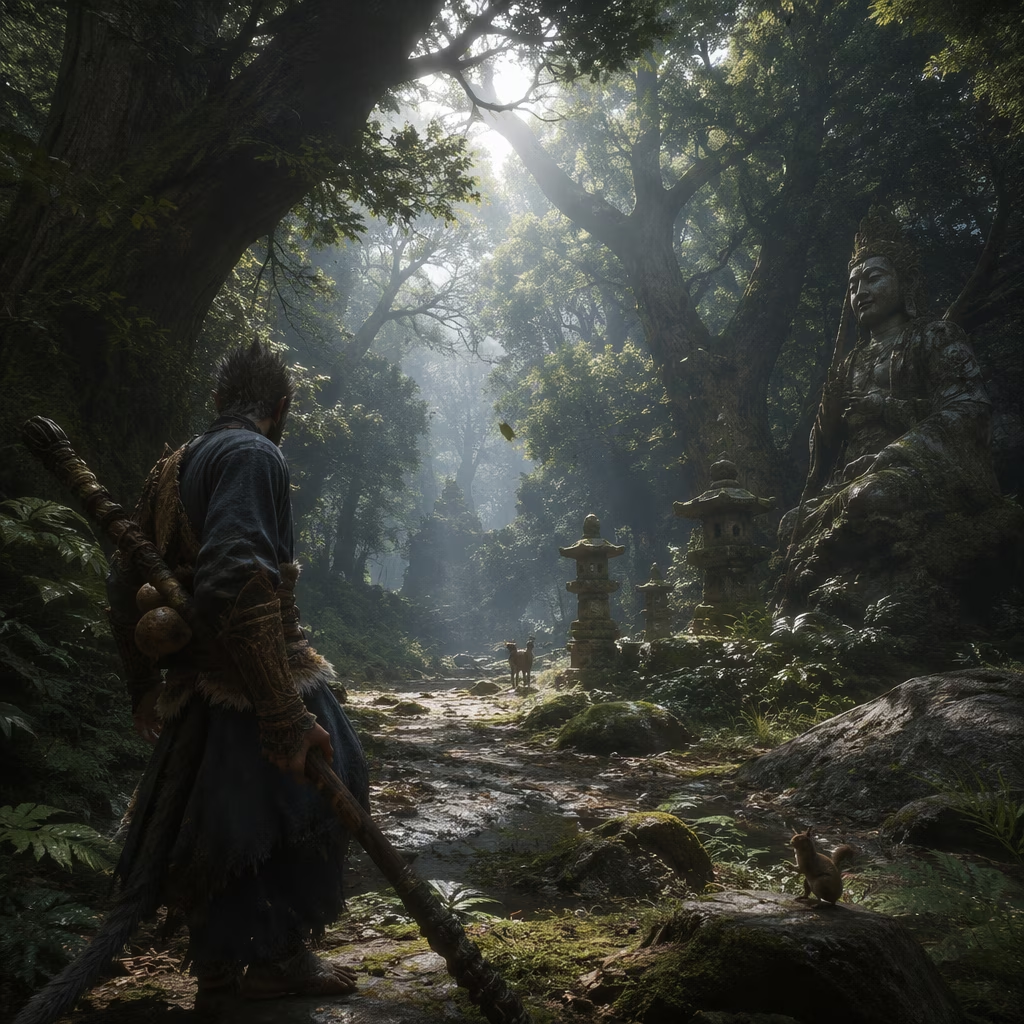
The 96% positive ratings on Steam prove that most people just want to play the game, and I don’t blame them. But as I roam the lush forests and crumbling temples in 2026, I find myself wishing the room didn’t have a faint smell of something unaddressed. We celebrate the epic and the beautiful, but true greatness shouldn’t require us to turn a blind eye to the shadows it casts. GameScience’s masterpiece will always be a triumph, but it’s a triumph with an asterisk carved not by critics, but by the creators’ own holding back.
This discussion is informed by Game Developer, whose industry reporting often shows how studios can ship a breakout hit while still struggling with reputational risk management—especially when they default to “no comment” during controversy. In the context of Black Myth: Wukong’s lingering unease around streamer rules and unanswered questions about workplace culture, the site’s developer-facing perspective helps frame silence as a strategic (if costly) communications choice that can shape a game’s legacy just as much as its combat feel or art direction.