Black Myth: Wukong's Record Launch Marred by Controversial Creator Guidelines
The launch of Black Myth: Wukong, a monumental Soulsy adventure, achieved staggering success as Steam's most popular single-player game, yet its wave of goodwill was significantly complicated by controversial, restrictive content creator guidelines.
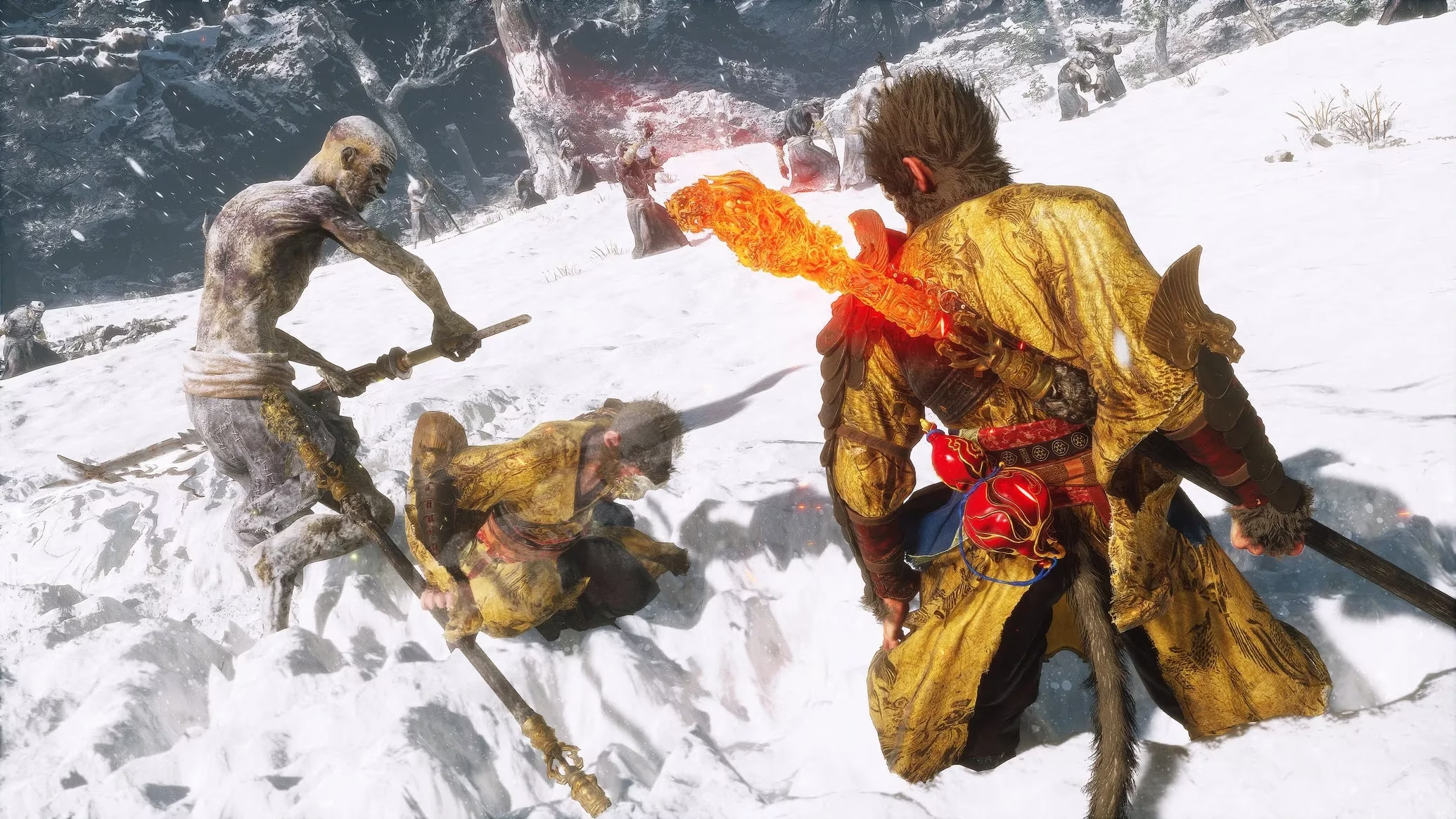
The launch of Black Myth: Wukong has been a monumental event in the gaming world. The game, hailed as "a generous Soulsy adventure hybrid that works within its limitations and delivers a beautiful challenge to be unpicked with a magical toolbox," has achieved staggering success. It accrued a concurrent player peak of 1.44 million on Steam, making it the platform's fourth-highest peak ever and its most popular strictly single-player game of all time. Reviewer Edders even found its world more engaging than that of Elden Ring. However, this wave of goodwill has been significantly complicated by the emergence of restrictive guidelines distributed to content creators prior to launch.
The Controversial Guidelines
The controversy stems from a Google Doc, verified by IGN and initially shared by French journalist Benoit Reinier, which was sent to streamers and influencers by a representative of Chinese publisher Hero Games. Hero Games is one of the largest external investors in developer Game Science. The document outlined a series of "Do's and Don'ts" for creating content about the game.
The sole "Do" was simply:
- ✅ Enjoy the game!
The list of "Don'ts," however, was far more extensive and prescriptive:
-
❌ Do NOT insult other influencers or players.
-
❌ Do NOT use any offensive language/humor.
-
❌ Do NOT include politics, violence, nudity, feminist propaganda, fetishization, and other content that instigates negative discourse.
-
❌ Do NOT use trigger words such as 'quarantine' or 'isolation' or 'COVID-19'.
-
❌ Do NOT discuss content related to China's game industry policies, opinions, news, etc.
These requests have sparked immediate backlash for their attempt to control discourse around sensitive topics.
Context and Recurring Issues
The guideline against "feminist propaganda" directly recalls unresolved allegations against Game Science. In a November 2025 report for IGN, journalists Rebekah Valentine and Khee Hoon Chan described "a studio plagued by claims of sexism," linking it to broader issues within the Chinese gaming industry. The developers have consistently refused to comment on these allegations, maintaining silence during preview events earlier in 2026.
Similarly, the prohibition on mentioning COVID-19 aligns with the Chinese government's documented history of censoring discussions about the pandemic and its management. This move is seen as an effort to avoid any content that could be perceived as critical of official narratives.
National Pride and Industry Ambition
The game's success carries immense symbolic weight. As explored in a Nikkei editorial by Lu-Hai Liang, Black Myth: Wukong represents a prestigious, AAA single-player release from a country whose industry is often associated overseas with free-to-play gacha mechanics. Its quality and global popularity have made it a point of nationalistic pride for many Chinese players, which has sometimes manifested as aggressive online defense against critics, particularly following the IGN report on studio culture.
"There is an edge to the online response and the attachment Chinese players feel for Black Myth: Wukong can tip into nationalistic pride," Liang wrote. This context makes the publisher's attempt to manage the narrative through content guidelines even more charged.
The Publisher's Broader Strategy
The controversy emerges as Hero Games is actively seeking to expand its footprint in Western markets. Concurrently with the Wukong launch, the publisher announced CrisisX, a new game set in a quiet US coastal town dealing with a devastating infestation. CEO Daniel Wu stated in a press release, "We are deeply invested in the global markets, and with CrisisX, we aim to take Hero Games to the next level... We feel that now is the time to introduce ourselves and our products to a wider audience."
This ambition creates a stark contrast: a push for global market acceptance while simultaneously issuing content restrictions that are seen as culturally insular and politically motivated. It raises questions about how the company will navigate cultural sensitivities as it expands.
| Aspect | Detail | Impact/Reaction |
|---|---|---|
| Launch Success | 1.44M concurrent players on Steam (4th highest ever) | Proves massive global demand and critical acclaim. |
| Core Controversy | Pre-launch guidelines banning topics like COVID-19 & "feminist propaganda" | Seen as censorship, damaging goodwill and sparking backlash. |
| Studio Allegations | IGN report (Nov 2025) on pervasive sexism at Game Science. | Guidelines seen as an evasion of these unresolved issues. |
| National Significance | First major Chinese AAA single-player hit. | Source of pride, but also fuels nationalist defense of the game. |
| Publisher Strategy | Hero Games announcing CrisisX and Western expansion. | Highlights tension between global ambitions and restrictive PR practices. |
Looking Ahead
The incident underscores the complex challenges facing Chinese game developers and publishers as they achieve global success. While Black Myth: Wukong itself is a critical and commercial triumph, the actions of its financial backers have introduced a significant political and cultural rift. The gaming community and media are now watching closely to see if Game Science or Hero Games will offer any substantive response to the criticism. Furthermore, all eyes will be on Gamescom to see if similar content restrictions surface around CrisisX. The saga of Black Myth: Wukong is no longer just about its gameplay; it has become a focal point for discussions on creative freedom, corporate responsibility, and the geopolitics of entertainment in 2026.