Black Myth: Wukong's $43 Million Budget Pales Next to $1.2 Billion Revenue, Highlighting Cost-Efficiency
Black Myth: Wukong development cost and sales highlight efficient AAA budgets, with $43M spent and over $1.2B in revenue generated.
Let me tell you, as someone who's been following the gaming industry for years, the story of Black Myth: Wukong still blows my mind. Here we are in 2026, and the echoes of its 2024 launch are still shaping conversations about budgets, success, and global development. The latest nugget of info comes from China's Zhejiang State Taxation Administration, which pegged the game's total development cost at "more than 300 million Yuan." That translates to roughly $42.3 million USD. Now, I know what you're thinking—that's a lot of money! But in the world of blockbuster AAA games, that's practically a bargain. It's a figure that makes you go, 'Huh, is that all?' especially when you stack it up against the game's earth-shattering sales.
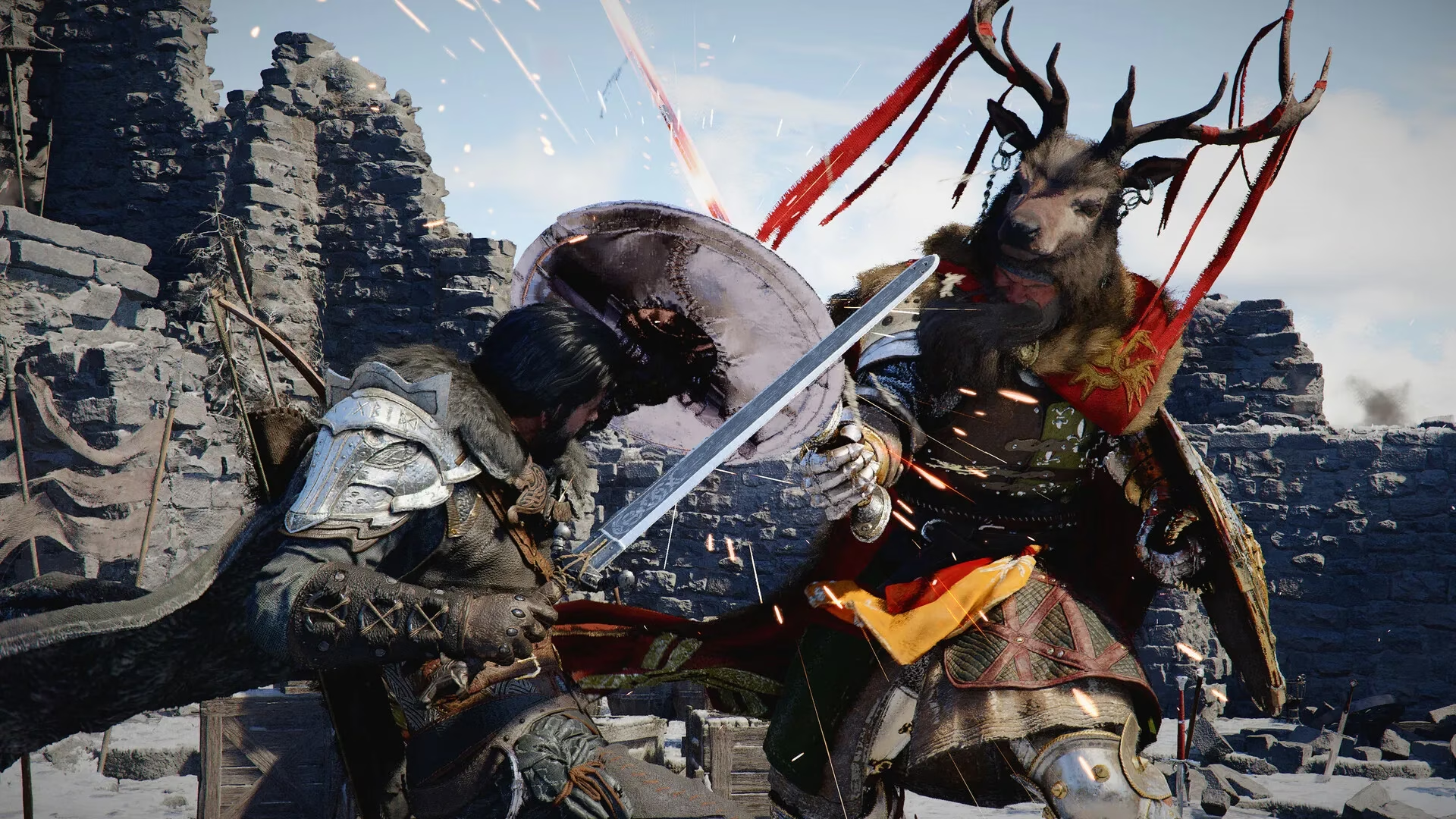
The Budget Breakdown: A Tale of Two Figures
First off, let's clear the air about those numbers. You might remember a Bloomberg report from back in the day suggesting a budget closer to $70 million. So, which one is it? Well, it's a bit of apples and oranges. The tax authority's report focuses on the total development cost—the direct money poured into making the game itself. The earlier figure likely included contributions from external investors and maybe even marketing. Think of it like this: the $43 million is the cost of buying the ingredients and paying the chefs. The other costs? That's renting the restaurant, advertising the grand opening, and splitting the profits with the backers.
We don't have the full spreadsheet, of course. A game's budget is a complex beast, chewing through cash for:
-
Staff Salaries: The lifeblood of any studio.
-
Tech & Tools: All that fancy hardware and software.
-
Office Space: Where the magic (and crunch) happens.
-
Support & Marketing: Getting the word out is half the battle.
Unless Game Science opens its books, the exact number might stay a mystery. But this $43 million tag is incredibly valuable. It gives us a solid anchor point to understand just how efficient this project was.
The Revenue Tsunami: Numbers That Defy Logic
Now, let's talk about the part that really makes your jaw drop: the return on investment. Black Myth: Wukong wasn't just a hit; it was a cultural tsunami.
-
Launch Week: Sold 10 million copies in under a week. They called it "one of the fastest-selling games of all time," and they weren't kidding.
-
Total Sales (as of TGS 2024): Surpassed 20 million copies. And remember, this was achieved only on PC and PS5 at the time!
-
Price Point: A standard $60 price tag.
Do the math: 20 million copies at $60 each equals a staggering $1.2 billion in raw revenue. Let that sink in for a second. A game that cost an estimated $43 million to make generated over $1.1 billion in gross profit before taxes, platform cuts, and other deductions. It made back its entire reported development budget in, like, the first hour of sales. It's the kind of success story you tell new devs to give them hope.
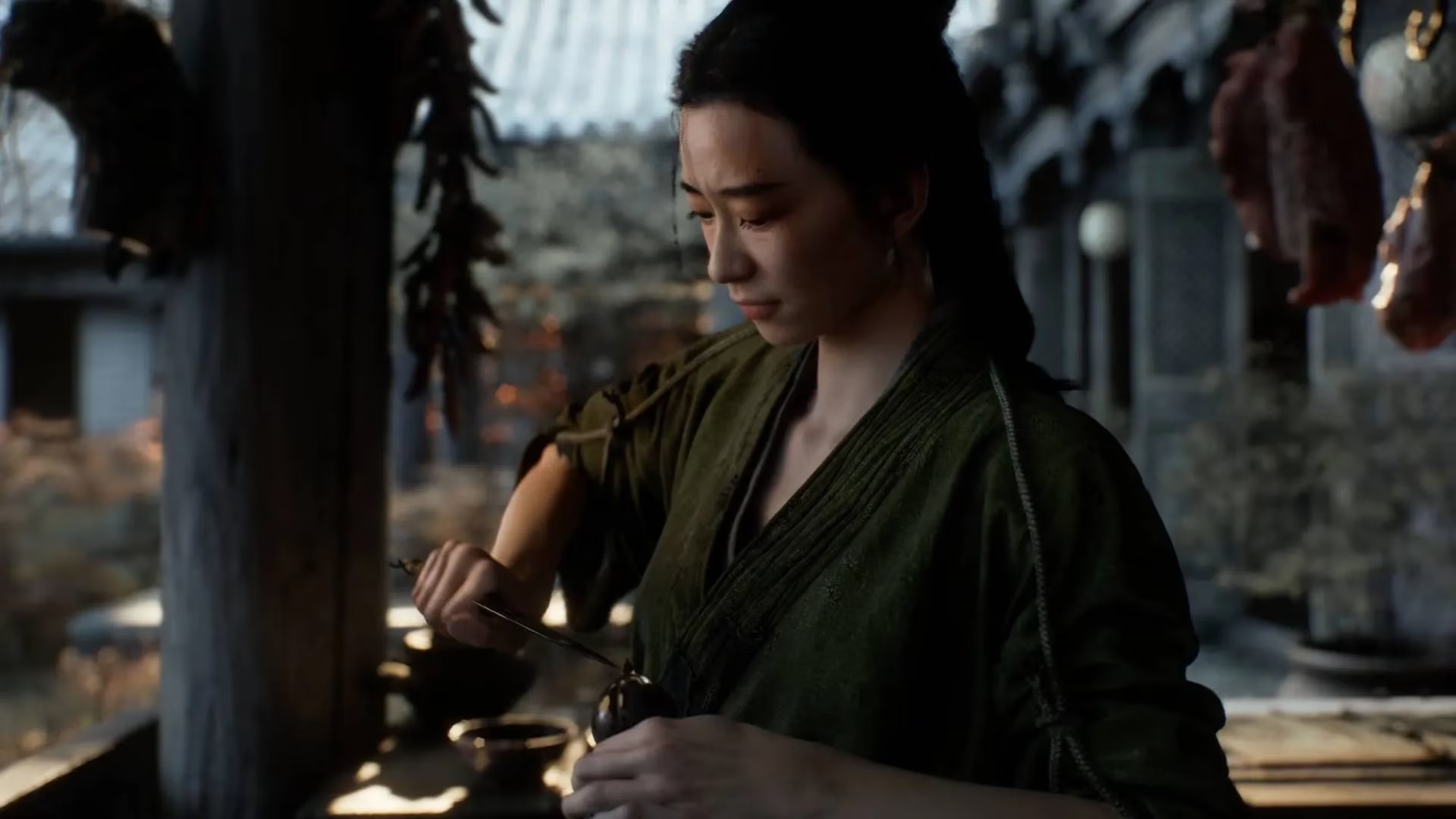
The Global Context: Why This Budget is a Big Deal
To appreciate why this budget is so noteworthy, you gotta look at the global playing field. In recent years, we've seen the cost of making a top-tier game skyrocket.
| Game Title | Developer Location | Reported/Estimated Development Cost |
|---|---|---|
| Black Myth: Wukong | China | ~$43 million (per tax data) |
| Horizon Forbidden West | Netherlands (Guerrilla Games) | $200+ million (per Sony leak) |
| The Last of Us Part II | USA, California (Naughty Dog) | $200+ million (per Sony leak) |
| New AAA Titles (Est.) | Global | $300 million or "much more" (industry insider) |
See the difference? It's night and day. A huge part of this gap comes down to average labor costs. Game developer salaries in China are significantly lower than in major hubs like California or the Netherlands. This isn't a judgment on quality—Wukong is a visual and technical masterpiece—but a stark economic reality. It allows a studio like Game Science to achieve a similar scale of production for a fraction of the cost.
Beyond the Sale: The Player's Commitment
The success isn't just in units sold; it's in how players have embraced the game. As of late 2024, the average playtime was sitting at a hearty 27 hours. That's no small feat for a challenging action RPG. It tells us people weren't just buying it for the hype; they were sticking with it, mastering its combat, and diving deep into its world. They were invested. In an age where games fight for your attention, that kind of engagement is pure gold.
The Ripple Effect in 2026
Looking back from 2026, Black Myth: Wukong did more than just make a ton of money. It sent a powerful message to the global industry:
-
AAA Quality is Not Geographically Limited: A studio in China can produce a game that competes on the world stage, both critically and commercially.
-
Budget Efficiency is Possible: While costs are rising everywhere, there are different models and economic realities that can lead to profitable blockbusters without a $300 million price tag.
-
Cultural Stories Have Global Appeal: A deep-cut adaptation of Journey to the West resonated with millions worldwide, proving that authentic, culturally rich stories have immense power.
The sequel teaser for Zhong Kui that dropped showed the devs "cooking" with their engine, flexing their technical muscles. It proved Wukong wasn't a fluke. It was the start of something. In an industry often gripped by layoffs and anxiety over unsustainable costs, the tale of this monkey king is a reminder that monumental success can come from unexpected places, and sometimes, it doesn't have to cost the earth to earn the world.