Black Myth: Wukong Retrospective: Mythological Boss-Rush Magic Endures in 2026
Black Myth: Wukong's exhilarating boss rush and ferocious combat deliver a thrilling soulslike journey through Chinese mythology.
Two years have passed since Game Science unleashed Black Myth: Wukong upon the world, yet the title’s ferocious combat and sumptuous retelling of ancient Chinese mythology continue to dominate discussions among action-game enthusiasts. Originally previewed in a breathless hands-on session during the summer of 2024, the title arrived that August after building an extraordinary head of steam as Steam’s most-wishlisted game. Now, in 2026, looking back at that early experience reveals just how faithfully the final product delivered on its promise of a flashy, demanding adventure that owes as much to Devil May Cry and the rebooted God of War epics as it does to FromSoftware’s modern masterpieces.
Developed by a then-new Chinese studio staffed with industry veterans and backed by Tencent, Black Myth: Wukong had already turned heads with glossy gameplay trailers dating back to 2020. Despite pre-launch controversies that the developer did not publicly address, the final release ignited a global player base, and revisiting that preview build illustrates precisely why. The game’s interpretation of the classic Journey to the West is far more forthcoming with its storytelling than most soulslikes. Semi-regular cutscenes introduce a memorable cast, including an early mentor whose sprouting potato-shaped head remains an oddly endearing image. As the nimble Sun Wukong, the Monkey King, players descend into lush forests teeming with gracefully animated foes—giant-headed baby men, oversized frogs, lumbering wolfmen, and blazing bears—all thirsting for a piece of the protagonist.
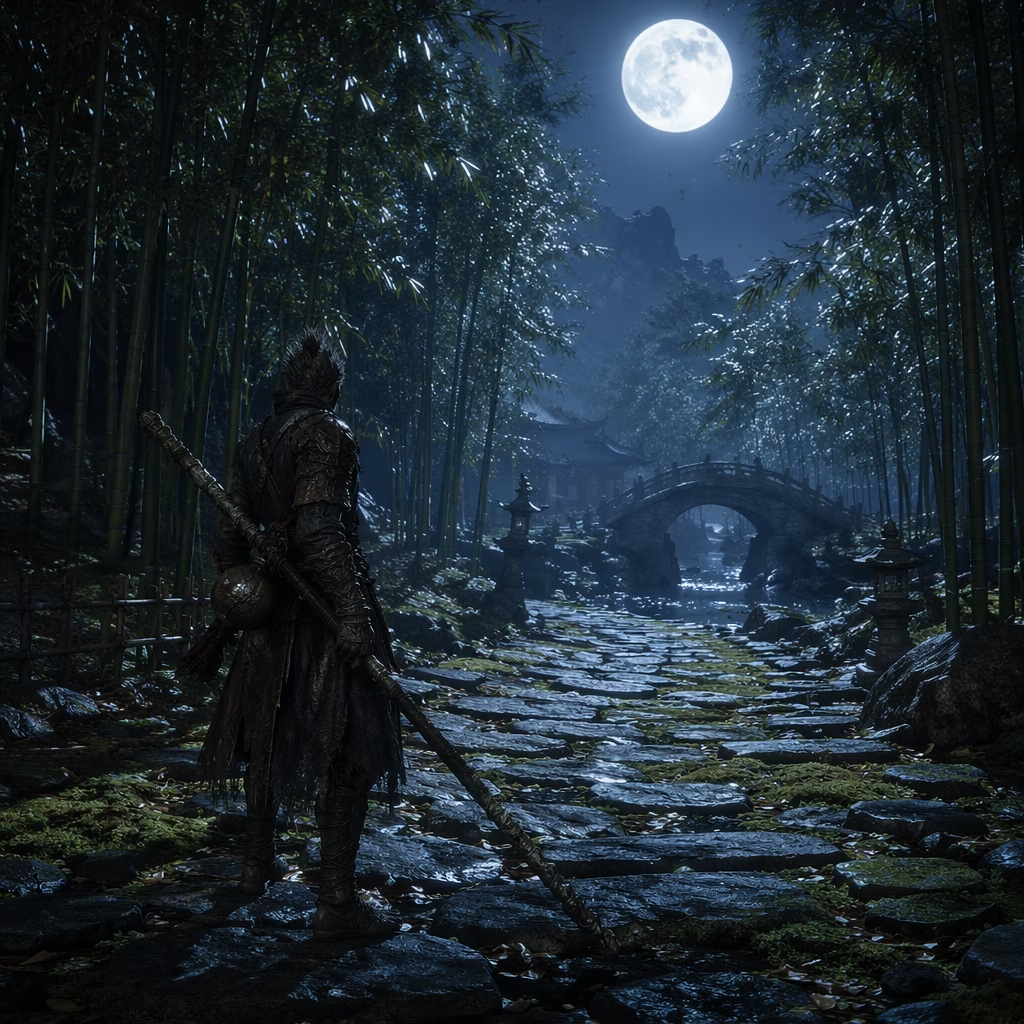
The bosses, however, are the undisputed stars. From the very first encounter, it becomes clear that Black Myth: Wukong is less about careful exploration and more about an exhilarating boss rush. A new towering threat seems to emerge every quarter of an hour, making for a zero-filler introduction that rarely lets the player catch their breath. The early forest and mountain ranges, while gorgeously rendered, feel surprisingly linear, often teasing what appear to be vast explorable areas only to halt the curious with invisible walls. Secrets do exist—chests tucked just off the beaten path, enemies hiding behind ancient trees, optional duels against nightmare-fuel giants—but the world always exerts an inescapable pull toward the next set-piece showdown. This design choice means the spaces between battles rarely encourage the kind of introspective, player-driven discovery that defines the best examples of the genre. Instead, the game transforms into a relentless test of mastery.
The combat system itself is both the source of immense frustration and ultimate elation. Battles are faster than many soulslikes, and a miniscule health bar paired with a limited number of restoratives can initially feel overwhelming. Spamming dodge is punished harshly thanks to a regeneration delay after every third consecutive attempt. There is no dedicated block—only well-timed perfect dodges that slow time and open a window for a couple of rapid strikes. The rhythm starts to click once players grasp the focus economy: light combos build focus, which can then be spent on devastating heavy attacks. Layered onto this foundation is a suite of abilities that would feel at home in a pure character-action game. A magic spell can freeze enemies solid, the staff can extend into a platform to crash down on unsuspecting groups, and a temporary transformation into a deceased boss grants a second health bar with access to the foe’s own attacks.
Progression follows a streamlined, Sekiro-like model. Each level-up awards an upgrade point to invest in ability trees, respecing is available from the very beginning, and there is no traditional min-max scaling that allows players to overlevel their way through obstacles. This design philosophy ensures that the hardest fights are calibrated to demand every ounce of the player’s skill, equipment, and consumable inventory. The game stubbornly refuses to let anyone grind their way to victory and instead pushes them toward constant experimentation. During the original hands-on, a particularly brutal two-stage brawl against a snake-powered wall of a boss forced a complete inventory reassessment—pouring over neglected consumable descriptions, swapping equipped abilities, and monitoring cooldowns in the heat of combat became mandatory. When it all clicked into place, the sensation of barely squeaking by with a fraction of health remaining felt transcendent.
This violent oscillation between despair and elation is Black Myth: Wukong’s signature. The preview session ended on a flaming mountaintop against a bear that moved with such speed and ferocity that it almost made the earlier snake nightmare look tame. From there, a dragon boss at the end of a side mission initially seemed insurmountable—until the creature toppled over, revealing explosive jars on its back that, once shattered, obliterated a third of its health bar. Moments like these cement the game’s reputation for spectacle and tactical surprise.
Since its release in August 2024, the title has only grown in stature within the action-RPG community. While some critics still point to the lack of quiet exploration and meaningful NPC interactions as a weakness, the mechanical depth, visual splendor, and sheer density of jaw-dropping boss fights have cemented Black Myth: Wukong as a standout. Its fusion of Chinese mythology, relentless pacing, and character-action flair continues to attract new players in 2026, and its influence can already be seen in the design conversations surrounding upcoming mythological action titles. For those who value a test of reflexes and adaptability above all else, Sun Wukong’s journey remains an unforgettable, if exhausting, pilgrimage.