Black Myth: Wukong in 2026: How Game Science Tackled Its Biggest Flaws – A Player’s Perspective
Black Myth: Wukong review highlights improved map, fewer invisible walls, and technical fixes, making this action RPG more immersive in 2026.
From the moment I first stepped into the mesmerizing forests of Black Myth: Wukong, I knew this was something special. The combat was fast, the bosses were brutal, and the world radiated a mythical charm that felt both familiar and entirely new. Eighteen months after its explosive launch, the game has grown in ways that even the most optimistic fans wouldn’t have predicted. With over 4.5 million copies sold on day one and a peak of 2.41 million concurrent players on Steam back in August 2024, the title soared to become one of the biggest launches in PC history. That near-mythical 96% Overwhelmingly Positive rating on Steam didn’t lie—it was incredible. Yet for all the praise, a handful of rough edges threatened to pull me out of the experience. Now, in 2026, I’ve come back to see how Game Science has responded to the most persistent complaints, and whether the journey to the West is smoother than ever.
One of the first things that drove me crazy during my initial playthrough was the complete absence of an in-game map. I’d spend hours backtracking through gorgeous but labyrinthine zones, trying to recall which path led to that optional boss I’d skipped ten hours earlier. Fast travel existed, sure, but without any visual representation of where I’d already been, every return trip felt like a gamble. The community was vocal about this—posts filled the forums with pleas for even a simple sketch of the area. Game Science listened. A free update in early 2025 introduced a minimalist map that reveals itself as you explore, marking shrines and major landmarks without spoiling the sense of discovery. It’s not a fully detailed minimap, but it finally ended those aimless wanderings.
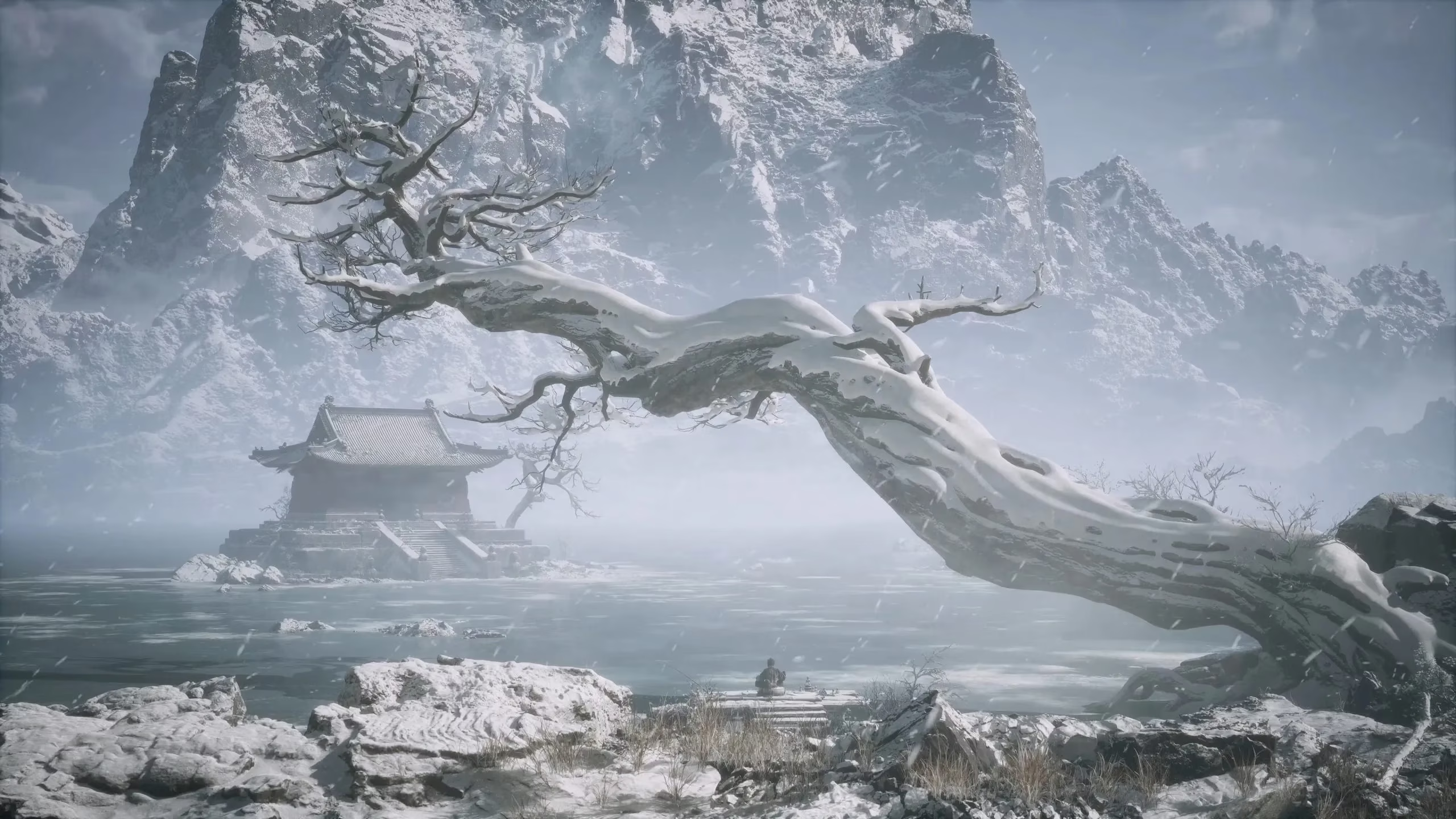
Of course, having a map wouldn’t mean much if half the terrain was cordoned off by invisible walls. I’ll never forget scrambling up a rocky slope, certain that a hidden chest waited behind a waterfall, only to slam into an invisible barrier. The immersion shattering was real. After launch, Game Science patched many of these walls out, gradually opening up secondary paths and small alcoves that used to be off-limits. The world feels more organic now—still not a true open world, but one where curiosity is more often rewarded than punished. I can finally trust the environment to communicate where I can and cannot go, rather than having to test every suspicious nook with a roll.
Then there were the technical hiccups that plagued both PC and PS5. On my high-end rig, I had to dial down settings just to maintain a stable 60 FPS during boss fights, and AMD users reported nightmarish stuttering. Load times, too, felt archaic. I timed myself: 21 seconds to continue from the main menu, 28 seconds when fast traveling—hardly acceptable when compared to instant transitions in other titles. The PS5’s Performance Mode, while mostly smooth at 60 FPS, suffered from input lag that made parries feel like a gamble. And don’t get me started on the bugs: crashes after beating a boss that forced me to redo the fight, audio dropping mid-cutscene, the English voiceover randomly switching to Chinese, and one memorable moment where my character fell through the world into an infinite void.
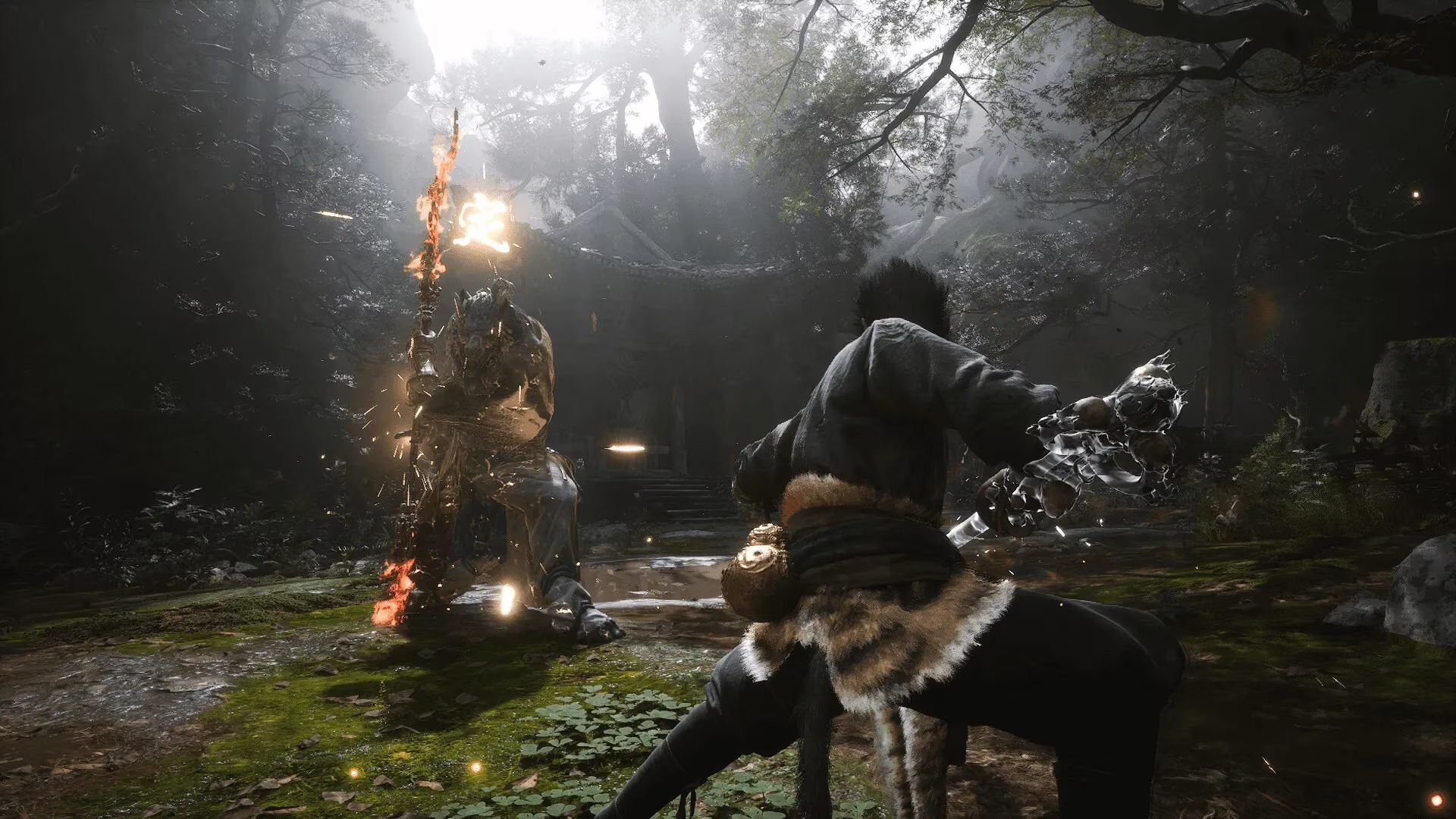
The good news is that 2026’s version is almost unrecognizable in terms of stability. Multiple performance patches have streamlined the pipeline, and load times have been cut in half on PC after the introduction of DirectStorage support. Input lag on PS5 Performance Mode is effectively gone after a dedicated rework of the frame pacing, and the game now rarely drops below 60 FPS even in the most chaotic battles. Crashing bugs are a rarity, and the strange audio glitches have been squashed. The English lip-syncing, however, remains a pet peeve. For a game that proudly offers a full English dub, the mismatch between lip movements and speech still breaks immersion. I’ve begged for a fix, but as of now, I’d recommend sticking to the original Chinese voiceover—it’s still the definitive way to experience the story.
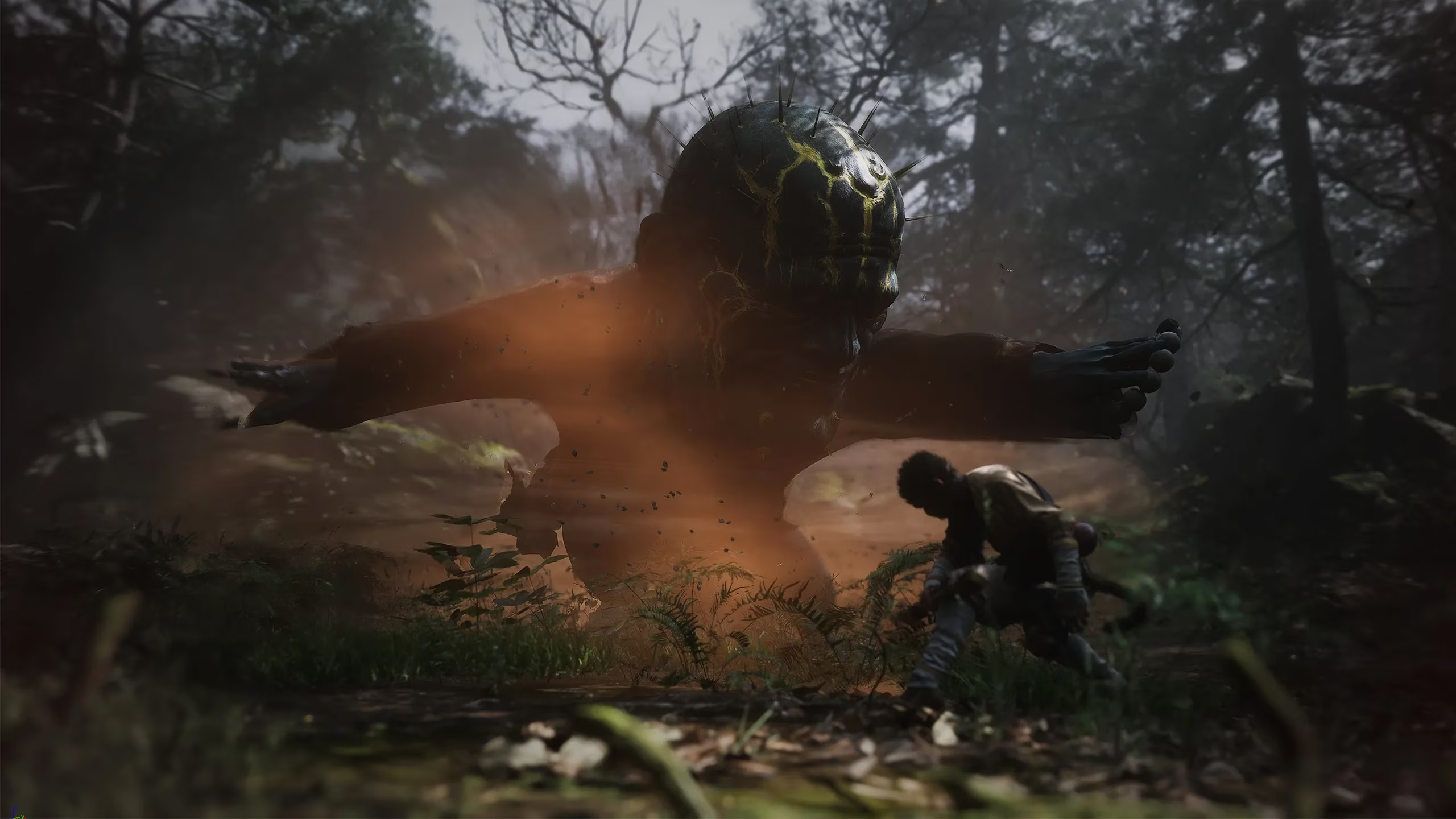
Speaking of story, I’ll admit I was lost more than once. Thrown headfirst into the Journey to the West mythology without much context, I often struggled to keep track of who was betraying whom and why a certain demon king mattered. Game Science has since added a comprehensive in-game codex called “The Pilgrim’s Records,” which fills in backstories for every character and region as you encounter them. It’s not shoved in your face—you have to seek it out—but for lore enthusiasts like me, it’s a game-changer. The narrative still demands attention, but at least now I don’t feel like I’m missing half the tale.
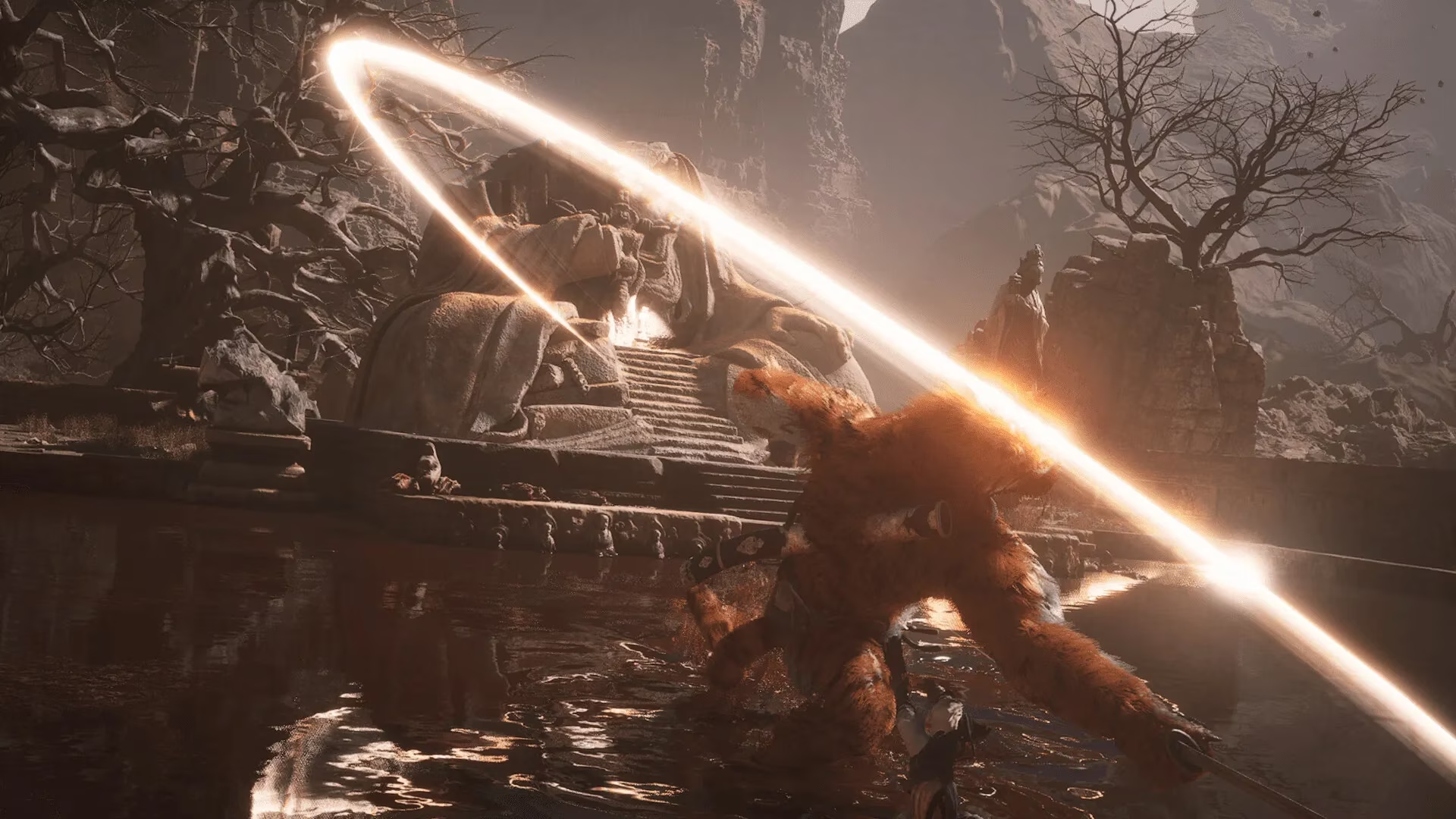
Combat is the heart of the experience, and while I loved it from day one, I craved more challenge after finishing my first run. New Game Plus offered little beyond increased damage numbers, and self-imposed restrictions like using only a single stance or abandoning magic felt like I was doing the developer’s job. In response, Game Science introduced a “Mythic” difficulty setting and a roster of modifiers (think higher enemy aggression, limited healing, or perma‑death) that can be toggled independently. Suddenly, a game that already felt rewarding became an entirely new beast. Enemy density, too, has been subtly adjusted; the first two chapters now feature more roaming mobs and mini-bosses, making exploration feel dangerous and alive rather than like a quiet walk between set-piece duels.
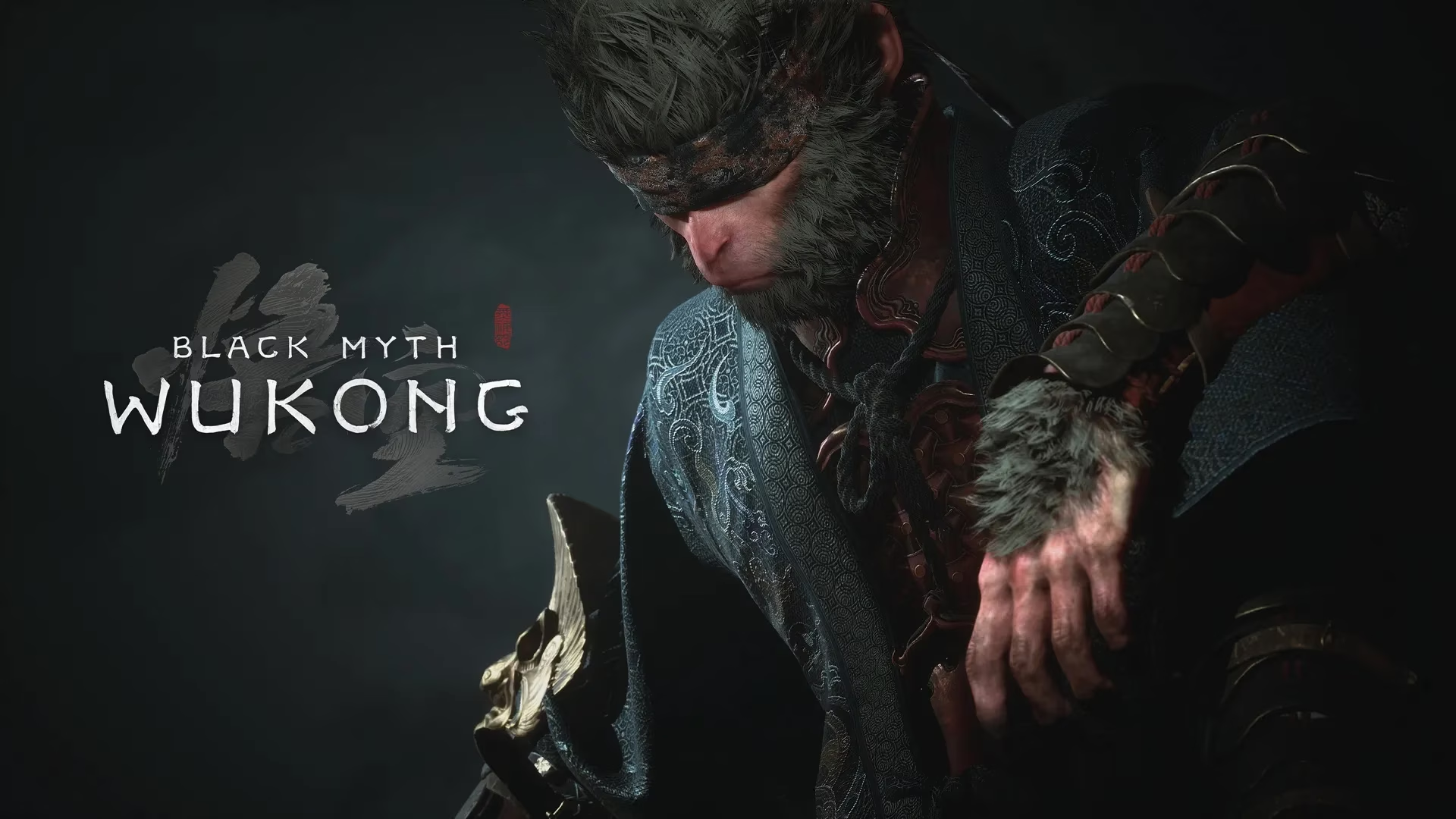
Looking back, the transformation of Black Myth: Wukong from a flawed masterpiece into a polished juggernaut has been a joy to witness. Not every issue is gone—I’m still waiting for proper lip-syncing, and the invisible walls, while reduced, haven’t disappeared entirely. But the game I’m playing in 2026 feels like a living, breathing legend that respects both my time and my curiosity. The combination of relentless community feedback, transparent patch notes, and Game Science’s commitment to improvement has set a benchmark for post-launch support. If you’ve been holding off due to those early complaints, there’s never been a better time to take up the staff and join the pilgrimage.