Black Myth: Wukong - A Towering Colossus of Boss Fights Stumbles on Mundane Grounds
Black Myth: Wukong delivers legendary boss fights and stunning action RPG gameplay, yet its level design offers surprisingly mundane exploration.
Step right up, fellow champions and controllers of chaos! Have you heard the tale of the celestial monkey who punches gods and parries deities? In the grand, unforgiving arena of 2025's action RPGs, one title has ascended to legendary status not by its journey, but by the monumental, earth-shattering stops along the way. We're talking, of course, about Black Myth: Wukong. This is a game that doesn't just throw bosses at you; it orchestrates symphonies of violence, ballets of brutality where every clash feels like a duel for the fate of the heavens themselves. But here's the million-dollar question that echoes through its stunning, Unreal Engine 5-rendered valleys: what happens when the music stops and you're left to wander between these epic concertos? The answer, seasoned warriors, is a tale of dizzying peaks and surprisingly pedestrian plains.
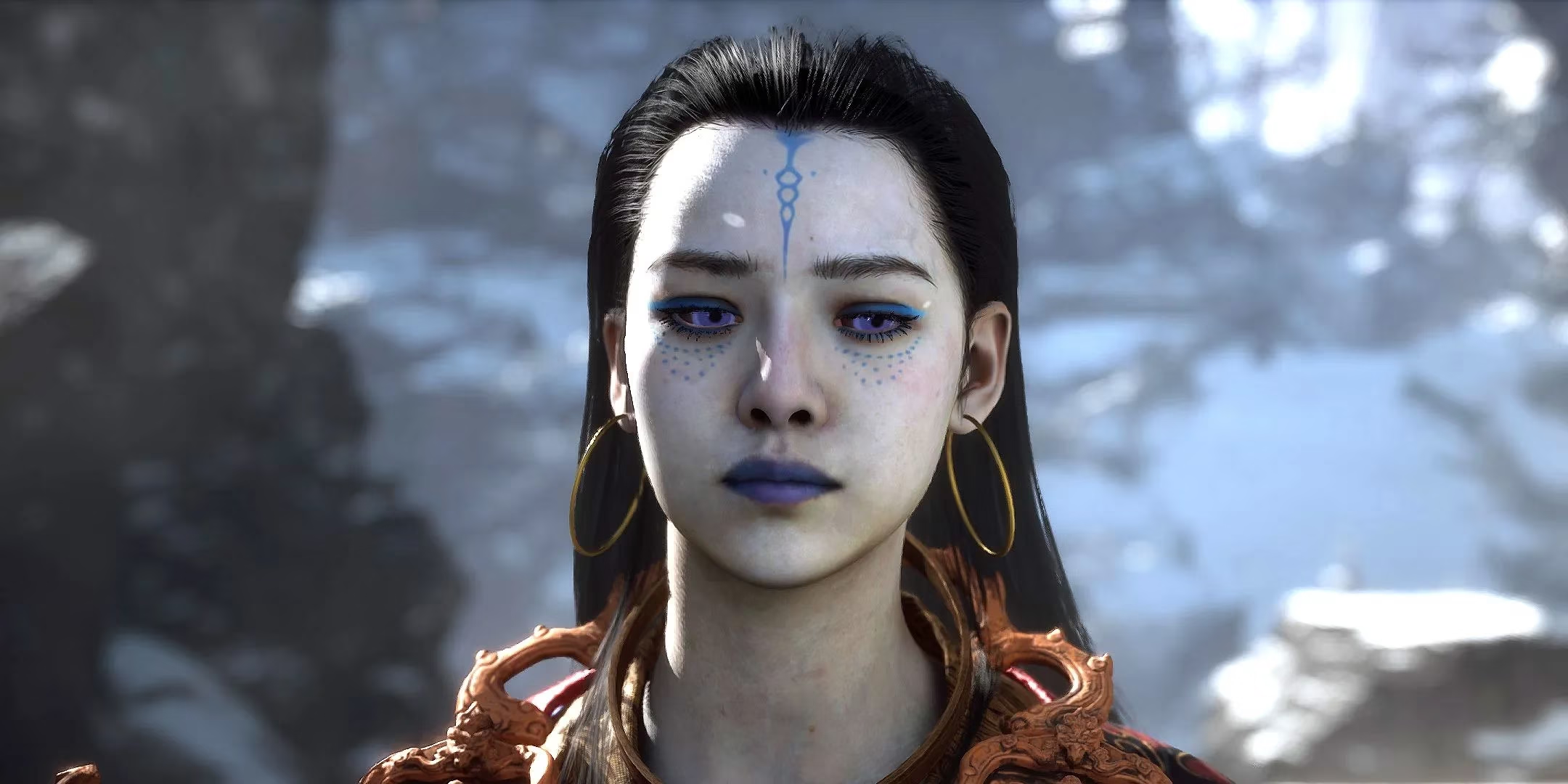
Let's not mince words: the boss fights in Black Myth: Wukong are nothing short of a masterclass. Imagine taking the most thrilling, white-knuckle encounters from the pantheon of soulslikes, polishing them to a mirror sheen, and then setting them against a backdrop of mythic Chinese splendor. FromSoftware's finest might nod in respect, but even the Tarnished of Elden Ring would have to admit the sheer, unadulterated consistency of Wukong's rogues' gallery. Each confrontation is a puzzle of timing, a dance of death with its own unique rhythm. The fluidity of the animations, the weight behind every swing of the staff, the spectacular visual effects that erupt with each spell—these moments make you feel like a true deity of combat. Isn't that the dream? To be utterly challenged, bested, and then to rise again, mastering patterns until you emerge victorious, heart pounding with pure, unadulterated elation? The game delivers this feeling in spades, making every victory taste sweeter than celestial peaches.
But what fills the spaces between these legendary clashes? Ah, therein lies the rub. For all its celestial ambition, a significant portion of your time as the Destined One is spent on... well, walking. Traversing levels that, while often breathtakingly beautiful, can feel like they were pulled from a fundamentally different, less inspired design document. You'll navigate frost-clad paths and ancient forests that look like paintings come to life, but the act of moving through them can sometimes feel like a repetitive march.
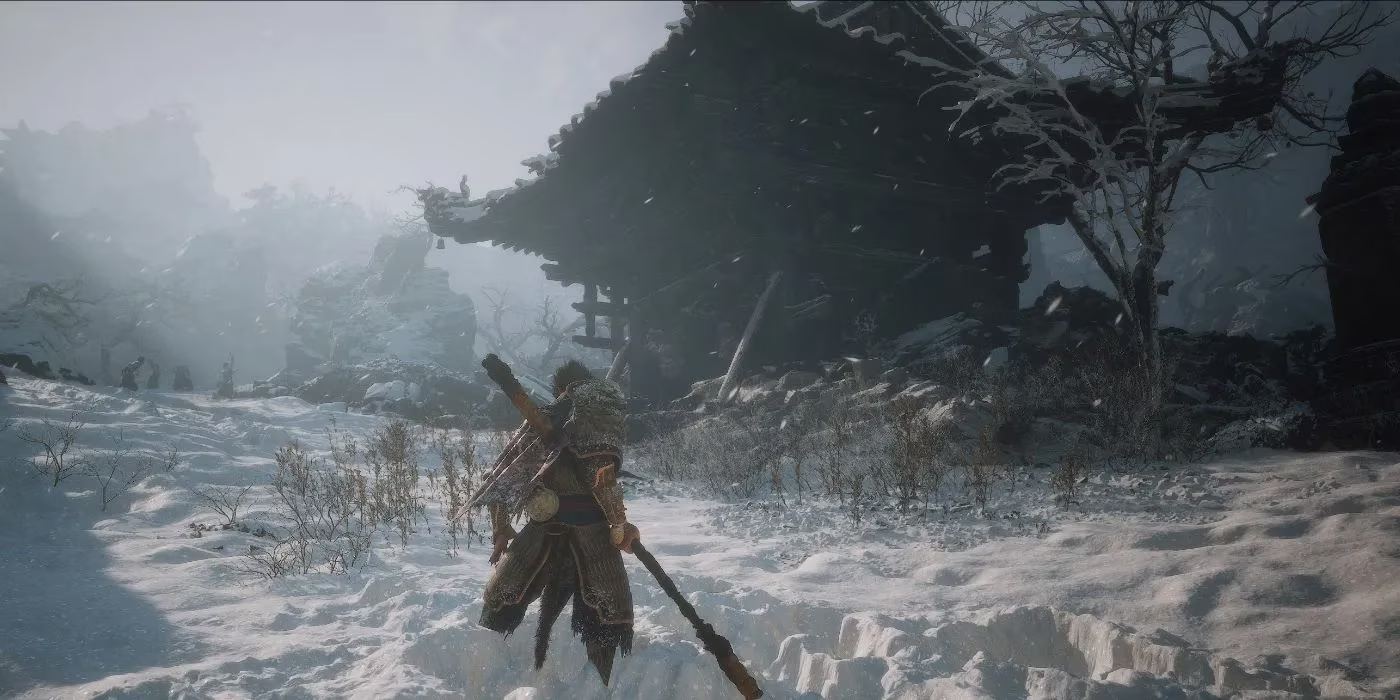
Let's break down the dichotomy between the sublime bosses and the standard levels:
| Aspect | Boss Fights (The Peak) | Level Traversal (The Valley) |
|---|---|---|
| Design Philosophy | Tight, mastery-focused, spectacle-driven. | Often expansive, exploratory, but sometimes filler-heavy. |
| Player Incentive | The thrilling tug of learning and conquering a unique challenge. | Often relies on inertia ("I guess I'll keep going") or loot discovery. |
| Consistency | Remarkably high; few, if any, duds in the lineup. | Wildly variable; brilliant vistas next to boring corridors. |
| Immersion Factor | Sky-high, you ARE the Great Sage. | Frequently broken by invisible walls and predictable enemy camps. |
Yes, you read that right: invisible walls. In a world crafted with such painstaking detail, where every rock and tree seems to whisper ancient secrets, nothing shatters the illusion faster than an invisible barrier on a perfectly climbable-looking ridge. The logic of traversal is frustratingly inconsistent. One mossy stone is a stepping stone to hidden treasure, while an identical one is an impenetrable fortress of nothingness. For a player seeking every secret—and what true hero doesn't?—this becomes a recurring source of annoyance, a rudimentary limitation in a game that otherwise feels so advanced.
Don't get it twisted; the levels aren't bad. They're often pleasant, filled with gorgeous details and bespoke enemy designs that are a treat to behold. But when held against the radiant brilliance of the boss fights, they simply fail to measure up. In its climactic moments, Black Myth: Wukong is punching in a weight class with the greats, but between those moments, it's sometimes just jogging on a treadmill. Other action masters have shown the way. Look at Sekiro: Shadows Die Twice—a game that made every grapple point, every rooftop, every hidden alley part of the engaging challenge, ensuring the journey to the boss was almost as compelling as the fight itself. Black Myth: Wukong consciously chooses a different path, opting for more straightforward exploration that provides downtime. Yet, one can't help but dream: what if that downtime was just as electrifying?
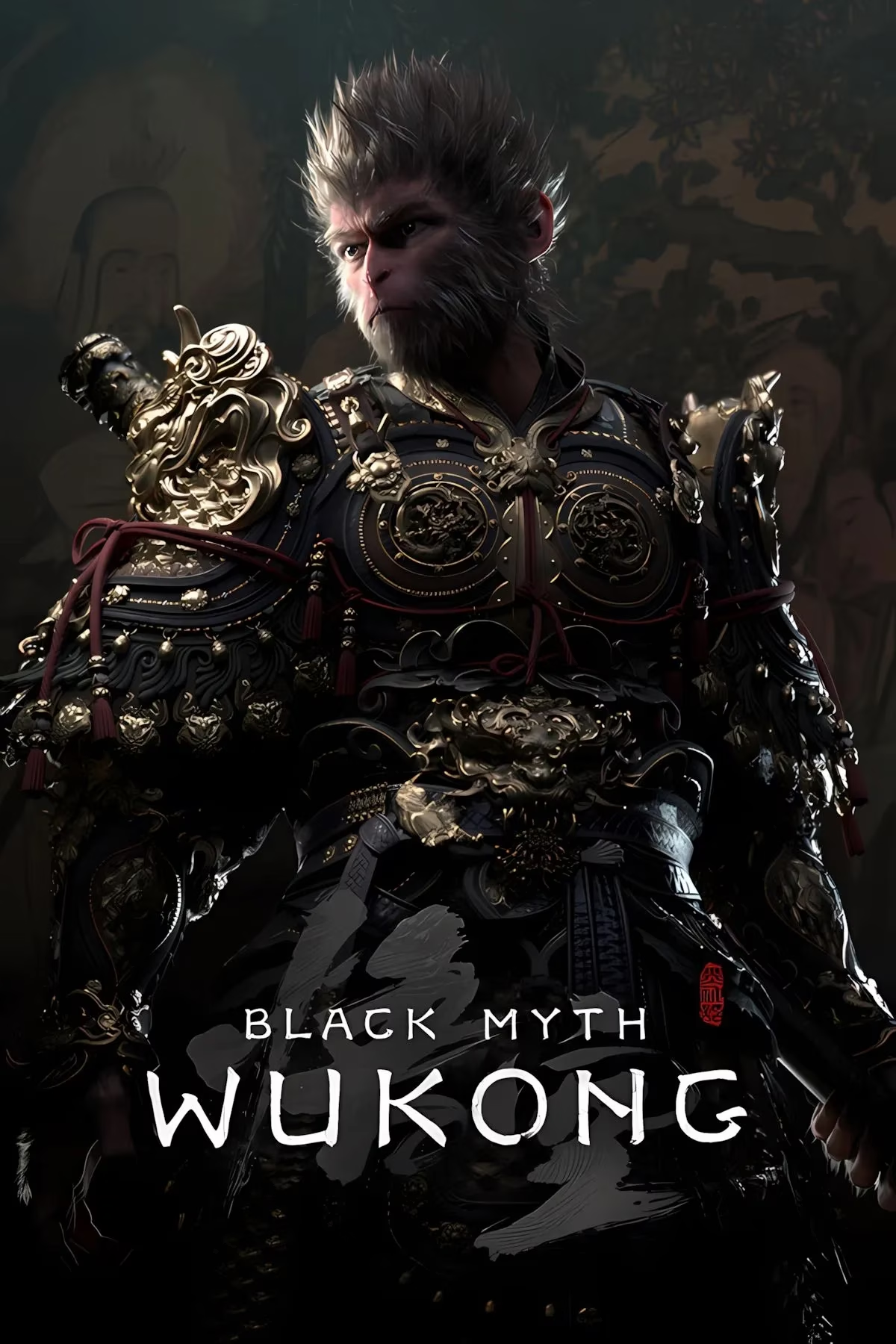
So, where does this leave our verdict for the discerning player of 2025? Black Myth: Wukong is, without a shadow of a doubt, an essential play. It is a landmark achievement in visual storytelling and boss design that will be discussed for years to come. The thrill of its combat, the majesty of its foes, and the sheer power fantasy of embodying Sun Wukong are more than enough to carry the experience to greatness. 🏆
However, it stands as a glorious, fascinating paradox—a game whose greatest strength simultaneously illuminates its most noticeable weakness. It's a towering colossus that sometimes forgets to mind its footing on the ground below. For GameScience's next project, the dream is clear: marry that unparalleled boss-crafting genius with world and level design that matches its ambition. If they can achieve that, then truly, not even the heavens will be the limit.
Final Musings for the Hardcore Player:
-
Play it for: The boss fights. Just... the boss fights. They are worth the price of admission alone.
-
Endure it for: The stunning visuals and the power of the core combat system.
-
Hope for the future: That the developers learn from this and build worlds as compelling as their bosses.
In the end, Black Myth: Wukong is a testament to spectacular, focused ambition. It reaches for the stars with one hand, and in doing so, reminds us that even legends sometimes trip over the rocks on their own path.